When space and portability matter, a small guitar speaker cabinet can deliver big, stage-ready tone without taking up a lot of room. This guide highlights five compact cabinets suited to smaller rigs, practice spaces, or portable setups. Each option is chosen for practical tone shaping, build quality, and how well it fits common small-venue needs. The top picks range from sealed 1×8 to versatile 1×12 and open-back designs, making it easier to match your amp head or modeler with confidence.
| Product | Best For | Key Benefit |
|---|---|---|
| Monoprice 1×12 with Celestion Vintage 30 | Small venue players seeking classic Celestion tone | Stage-matched 30W head compatibility |
| Orange PPC108 20W 1×8 | Traveling players needing ultra-compact cabinet | Classic Orange look with tight, focused 8″ voice |
| American Sound Connection 1×12 Carpet Cabinet | DIY/tailor-tone enthusiasts | Customizable enclosure for any 12″ speaker |
| Sound Town GUC112BK-EC 1×12 Birch | Budget-conscious tone purists | Plywood build with durable finish |
| Valeton FRFR 10″ 1300W | Modelers and multi-FX players | High power, full-range FRFR performance |
Monoprice 1×12 with Celestion Vintage 30

The Monoprice 1×12 cabinet uses a Celestion Vintage 30, a staple for popular rock and blues tones. This model is designed to pair with a 30W Stage Right head, offering a practical, compact option for small stages or home studios. Best for players who want a familiar Celestion character in a smaller footprint, without sacrificing stage presence.
- Best for players seeking a classic Celestion V30 response in a compact 1×12 format.
- Better for those already using a 30W head or seeking a stage-ready 1×12 cabinet.
- Caution: May feel a bit less low-end extension compared to larger 2×12 cabinets in open-room applications.
Orange PPC108 20W 1×8″ Speaker Cabinet

The Orange PPC108 delivers a compact, closed-back 1×8 design with the distinctive Orange vibe. This cabinet is ideal for tight spaces or practice rooms where a small footprint and focused midrange are preferred. It pairs well with a range of small to mid-size heads that benefit from a dry, punchy response.
- Best for players who need a tiny, portable cabinet with a strong, focused voice.
- Better for scenarios where space is at a premium or quiet studio setups are common.
- Avoid this if you require deep bass extension from a larger speaker area.
American Sound Connection 1×12 Empty Cabinet
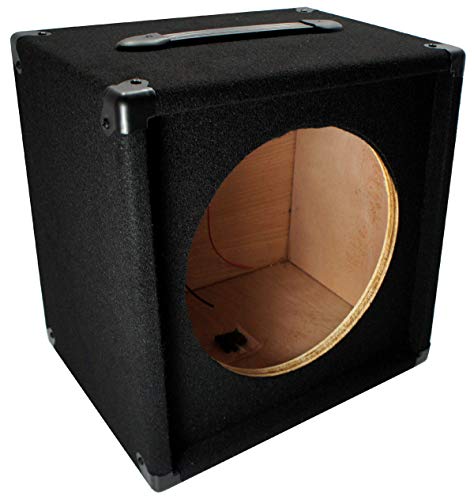
This empty 1×12 enclosure from American Sound Connection is designed for builders who want a customizable cabinet that can accept any 12″ guitar speaker. It emphasizes precision assembly and durable materials, making it suitable for live gigs, rehearsals, and studio workflows where tone customization matters.
- Best for builders who want to tailor cabinet materials and speaker choice.
- Better for those who value a robust, reliable enclosure with flexible mounting.
- Limitation: Requires selecting and installing a speaker and hardware externally.
Sound Town 1×12 Birch Cabinet GUC112BK-EC

The Sound Town GUC112BK-EC uses birch plywood with a black tolex finish, presenting a sturdy, professional cabinet for 1×12 setups. This model remains versatile for Celestion or Eminence speakers, offering a reliable platform for delivering tight mids and clear highs in small to mid-sized rooms.
- Best for tone purists who want a sturdy plywood cabinet with a simple, clean aesthetic.
- Better for players who regularly swap speakers to alter tone.
- Limitation: Lacks built-in speaker; requires separate speaker purchase.
Sound Town 2×12 130W Open-Back Cabinet

The 2×12 open-back design from Sound Town expands the tonal palette in a compact format. With 130W of power handling and a flexible mono/stereo jack plate, this cabinet is well-suited for players who want a broader, more open sound with expressive spread while maintaining a compact footprint.
- Best for players seeking more air and detailing in the tone from a small footprint.
- Better for open-back flavor and wide stage presence with 2×12 configuration.
- Limitation: Open-back designs can be less protection in rough transport compared to closed-back models.
Seismic Audio 212 Cabinet

The Seismic Audio 212 cabinet features two 12″ woofers, a metal grill, and a robust 200W RMS rating. This cabinet is designed for higher output within a compact format and can be wired for different configurations, offering a balance of power and portability for small venues or rehearsal spaces.
- Best for players needing higher wattage in a compact 2×12 format.
- Better for louder practice spaces or intimate gigs where headroom matters.
- Caution: Heavier than single-woofer cabinets, which may affect transport ease.
Buying Guide: Key Considerations For Small Guitar Cabinets
- Speaker configuration: Choose 1×8, 1×12, or 2×12 based on space, transport, and tone goals. Open-back designs offer more air and sparkle, while closed backs emphasize punch and lower midrange.
- Power handling: Match cabinet power rating to your amp head or modeling rig to avoid output imbalance. Higher wattage cabinets can handle more headroom with smaller cabs.
- Construction: Birch plywood typically offers durability and tone consistency; synthetic coverings and metal corners add stage durability and aesthetic appeal.
- Speaker compatibility: Some cabinets come empty, designed for user-supplied speakers, while others are built around a specific speaker voice. Consider whether you want to customize the tone later.
- Portability and size: Small cabinets should be easy to transport, with secure grilles and sturdy handles. Weight and dimensions influence gig bag and car-space planning.
- Sound goals: For blues, classic rock, or metal, consider whether you want tight, focused low end (sealed) or more airy, open tone (open-back). Cymbal shimmer and articulation can guide cabinet choice.
- Avoid common pitfalls: Over-reliance on aesthetic features without verifying speaker type or cabinet construction can limit tone and durability in live use.
Frequently Asked Questions
- What is a small guitar cabinet best used for? Small cabinets are ideal for practice spaces, small venues, and flexible studio setups where space and weight matter but tone must remain strong.
- Should I choose an empty cabinet or a pre-loaded one? Empty cabinets offer customization and speaker-swapping flexibility, while pre-loaded units provide a ready-to-use solution with a guaranteed speaker type.
- What is the difference between open-back and closed-back cabinets? Open-back cabinets usually produce more spacious tone with better dispersion; closed-back cabinets deliver tighter bass and more focused midrange.
- Can a 1×12 cabinet replace a 2×12 for small gigs? In many cases, yes for smaller venues or stages, but you’ll trade some air and overall volume. Consider your amp head power and audience size.
- Is birch plywood better than other woods for guitar cabinets? Birch plywood is known for rigidity and clear tone. It often offers better durability and consistent sound compared to composite options.
- What should I consider when pairing with a head or modeler? Match the cabinet’s impedance and power rating to your amp head or modeler, and consider whether you want a more focused or more open tonal character.