Answering the needs of serious players, this guide highlights top Steven Mead euphonium mouthpieces designed for articulation, tonal focus, and embouchure stability. Ideal for advanced students, professionals, and dedicated enthusiasts, these mouthpieces balance resistance and airflow for clear high passages and expressive dynamics. Below, five options are compared to help you choose based on your playing style and instrument setup.
| Product | Cup Diameter | Backbore / Fit | Best For | Notes |
|---|---|---|---|---|
| SM3U Ultra | 26.0–26.4 mm | V-Type Backbore | Advanced players needing upper-register stability | Balanced airflow, smooth high passages |
| SM5 | 25.7 mm | Barrel Backbore | Expressive solo work and varied repertoires | Dynamic control across styles |
| SM4U Ultra | 26.0–26.4 mm | V-Type Backbore | Professional players seeking broad versatility | Strong embouchure development |
| SM5UH Ultra Heroes | 25.7 mm | V-Type Backbore | Band and ensemble settings requiring focus | Refined rim for clean articulation |
| SM3X | 26.4 mm | V-Type Backbore | Developing players to advanced growth | Hybrid funnel and bowl cup for smooth transitions |
Denis Wick Steven Mead Ultra Euphonium Mouthpiece SM3U
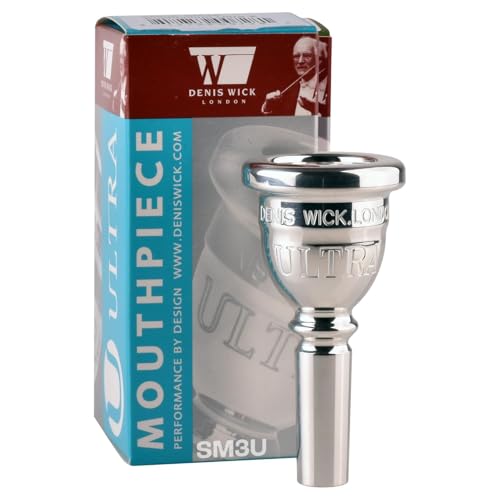
The SM3U is designed with a V-Type backbore to balance airflow and tone. It supports improved response in the upper register and helps maintain tonal integrity during high passages. Best for advanced players who need reliability and control when performing demanding repertoire.
Who it’s best for: professional players and serious students seeking precise articulation and a bright but controlled sound. Caution: the larger cup may feel slightly resistant for players with a very small embouchure or preferred lighter resistance.
Denis Wick Steven Mead Euphonium Mouthpiece SM5
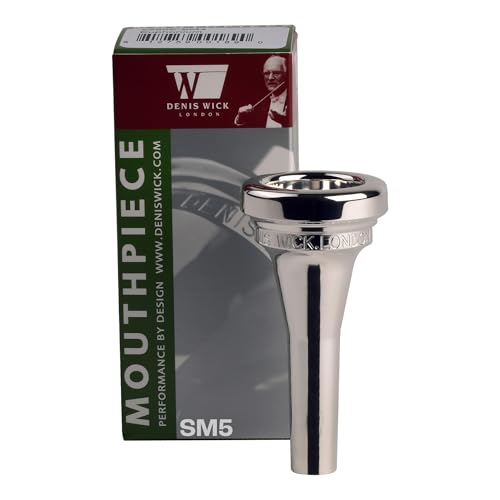
The SM5 mouthpiece is built for expressive playing with a carefully balanced resistance and airflow. It is designed to help players explore a full dynamic range with confidence, clarity, and comfort. Its design supports both lyrical solos and technical passages.
Who it’s best for: students and developing players who want a natural feel that evolves with their playing. Caution: might be less ideal for players who prefer a lighter, less resistant setup for quick phrasing.
Denis Wick Steven Mead Ultra Euphonium Mouthpiece SM4U

The SM4U mirrors the SM3U’s performance with a similar V-Type backbore but tuned for a broader range. It supports strong embouchure development and tonal consistency, making it suitable for advanced players who perform across styles. The design encourages smooth register transitions and clear articulation.
Who it’s best for: professionals and advanced students seeking versatility in ensemble and solo contexts. Caution: may require a slight adjustment period for players accustomed to a lighter resistance mouthpiece.
Denis Wick Steven Mead Ultra Heroes SM5UH

SM5UH features a refined rim contour and an inner edge designed for clean articulation and a centered euphonium tone during extended performances. The V-Type backbore with a large shank focuses projection and sound, making it suitable for band, solo, and ensemble work.
Who it’s best for: players needing strong projection and a focused core tone in varied settings. Caution: the more pronounced rim shape may feel different for those used to flatter rims or lighter resistance mouthpieces.
Denis Wick Steven Mead SM3X Ultra Euphonium Mouthpiece

The SM3X combines precision engineering with a V-Type backbore for balanced airflow and tone. It offers a 26.4 mm cup size and a large shank, designed for easier articulation and a centered, resonant sound suitable for a wide repertoire.
Who it’s best for: players seeking a balanced blend of response and depth across genres. Caution: the larger cup might feel more resistant for players with a lighter embouchure or preference for thinner rim profiles.
Buying Guide: Steven Mead Euphonium Mouthpieces
What cup size should I choose?
Smaller cups deliver faster response and more control in high passages; larger cups promote a fuller, darker tone and easier low register. Consider your typical repertoire and playing style.
Is backbore important?
Yes. V-Type backbores tend to provide balanced airflow and focused projection, while barrel backbores can offer a different blend of resistance and core tone. Choose based on preferred articulation and ensemble needs.
What about shank size?
A large shank generally offers stable fit and compatibility with most euphoniums. If your instrument has unique receiver dimensions, confirm compatibility before buying.
Who should use these mouthpieces?
Advanced students, professionals, and serious players who want refined articulation, tonal clarity, and endurance across long performances.
Should I try multiple models?
Denis Wick’s testing methods and product lines are designed to let players compare tone and articulation across models. Consider trying 2–3 models to identify the natural fit for your embouchure and style.
FAQ
- Q: Do these mouthpieces fit all euphoniums? A: They are designed with standard large shank fitting and should be compatible with most euphoniums; verify your instrument’s receiver size if unsure.
- Q: Which mouthpiece is best for high register playing? A: Models with a slightly larger cup and balanced backbore, like SM3U or SM4U, are commonly chosen for upper-range stability.
- Q: Can I switch between mouthpieces for different repertoire? A: Yes, many players use different mouthpieces to optimize tone for solos, bands, and chamber music.
- Q: Are silver-plated finishes durable? A: Silver plating offers brightness and tonal feel, with durability depending on care and use.
- Q: Is there a recommended mouthpiece for beginners? A: For developing players, a model with balanced resistance and comfortable rim, such as SM3X or SM5, is often suitable.
- Q: How do I evaluate fit beyond the listed features? A: Consider embouchure comfort, response in passages, and tonal stability across registers during practice.