Looking for a reliable heat source that mimics a real-fire ambiance while supporting modern convenience? This guide highlights five top options that blend wood stove aesthetics with gas-fired warmth. Best for homes seeking steady, controllable heat without constant wood tending, these units target spaces from cozy apartments to larger living areas. The following selections emphasize gas or gas-assisted fire features paired with traditional wood-stove styling for visual appeal and dependable warmth.
| Product | Type | Best For | BTU Range | Square Foot Coverage |
|---|---|---|---|---|
| Ashley DV Cast Iron Gas Stove | Gas Stove | Small to medium living spaces; those who want remote control | 23,500 BTU (natural gas) | Up to 1,000 sq. ft. |
| Duluth Forge Ventless Natural Gas Stove | Ventless Gas Stove | Open floor plans; quick warmth without venting | 25,000 BTU | Up to 1,100 sq. ft. |
| Buck Stove Model ZCBBXL 42″ Fireplace Insert | Gas Fireplace Insert | Medium to large rooms; retrofit in existing cavities | 40,000 BTU | Not specified (vent-free) |
| US Stove 1,200 Sq. Ft Wood Stove | Wood Stove | Traditional wood heat with classic look | 68,000 BTU | Up to 1,200 sq. ft. |
| Comfort Glow Cast Iron Wood Stove | Wood Stove | Compact spaces needing efficient wood heat | Known for efficient heat retention | Heats up to 900 sq. ft. |
Ashley DV Cast Iron Gas Stove

The Ashley DV Cast Iron Gas Stove delivers steady heat with a classic cast-iron exterior. It is designed to heat up to 1,000 square feet and provides 23,500 BTUs for natural gas. A 130 CFM blower helps distribute warmth, and a remote control adds convenience for adjusting flame height and heat output from across the room. The red brick liner and Ridgewood timber logs create a realistic fire ambiance that mimics a traditional wood stove, making it well-suited for living rooms seeking a cozy, rustic look without the mess of wood burning.
Best for: Small to medium living spaces where a realistic, wood-stove appearance is desired along with easy remote-controlled operation.
Caution: As a gas appliance, ensure proper gas line installation and ventilation per local codes. The model relies on a natural gas supply; compatibility with propane may require conversion kit if available.
Duluth Forge Ventless Natural Gas Stove
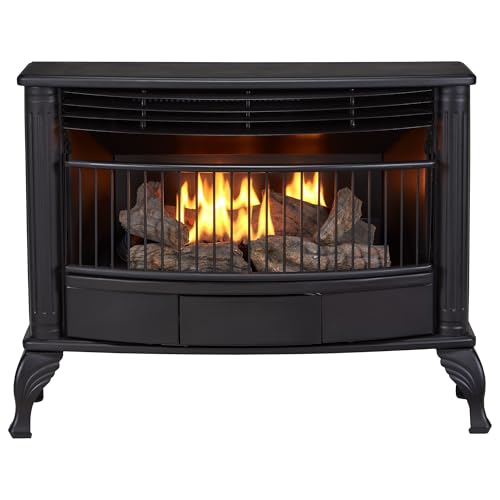
The Duluth Forge ventless gas stove operates without a chimney, rated at 25,000 BTU to heat about 1,100 square feet. It features hand-painted logs and a cast-into-concrete look to replicate the details of a real wood fire, delivering a high-end appearance. Thermostat-controlled settings let you tailor warmth to comfort levels, making it flexible for seasonal changes and rooms with varying insulation. The ventless design simplifies installation and can be a strong match for open-concept living spaces.
Best for: Larger rooms or open layouts where venting is impractical, and quick, consistent warmth is a priority.
Caution: Vent-free designs require careful indoor air quality considerations; ensure proper room size and ventilation according to manufacturer guidance and local codes.
Buck Stove Model ZCBBXL 42″ Fireplace Insert

The Buck Stove ZCBBXL 42″ fireplace insert offers a 40,000 BTU heating capacity and is designed for flexible installation in wood-framed cavities, making it suitable for remodeling or new construction with an existing mantel. It features a standing pilot ignition system and a blower for improved heat distribution. The model supports gas operation, enabling dependable warmth with a realistic flame presentation and a wide viewing area. It is a robust choice for spaces where a large, efficient gas-fire insert is desired.
Best for: Medium to large rooms where retrofitting a gas fireplace insert is feasible and a strong heat output is needed.
Caution: Proper gas line sizing and venting requirements should be followed; installation may require professional service to ensure safety and efficiency.
US Stove 1,200 Sq. Ft Wood Stove

The US Stove 1,200 Sq. Ft Wood Stove provides a traditional wood-burning option with substantial heat output—up to 68,000 BTUs—making it an efficient choice for larger spaces or colder climates. Its cast iron feed door and a large ceramic glass window let you enjoy the flame while watching the fire’s glow. The model replaces a previous Defender wood stove design, signaling updates for improved performance and durability.
Best for: Owners prioritizing classic wood-burning aesthetics and strong heat output for sizable living areas.
Caution: Wood stoves require regular maintenance, chimney clearance, and seasonal inspection to prevent creosote buildup and ensure safe operation.
Comfort Glow Cast Iron Wood Stove

The Comfort Glow Cast Iron Wood Stove emphasizes compact design with efficient heat retention. It fits 22″ logs and can heat spaces up to about 900 square feet, offering a practical balance between size and performance. The heavy-duty cast iron construction is built to withstand sustained use and maintain heat energy, while the 6″ flue collar simplifies venting considerations. This option suits smaller rooms or apartments where a traditional wood stove appearance is desired without overwhelming space.
Best for: Smaller to mid-sized rooms seeking wood-stove ambiance and reliable warmth without a large footprint.
Caution: Ensure the fireplace or hearth clearance is appropriate for the unit’s dimensions and local building codes before installation.
Buying Guide: Key Purchase Considerations
- Heat output and space size: Match BTU ratings to room square footage. Higher BTU units heat larger areas, but may consume more fuel or gas.
- Fuel type and installation: Gas stoves offer easier control and clean convenience; ventless gas models require careful ventilation planning. Wood stoves provide authentic ambiance but need regular tending and chimney maintenance.
- Ventilation and safety: Consider whether vented or ventless configurations suit your home. Ensure clearances from combustibles and proper installation per local codes.
- Controls and convenience: Remote controls, thermostats, and blowers improve comfort and heat distribution. Assess whether you prefer manual or automated operation.
- Aesthetic fit: Choose models with finishes and firebox styles that complement your interior—especially important for the wood-stove look.
- Maintenance needs: Wood stoves need chimney cleaning and periodic inspection; gas models require gas line checks and CO monitoring where applicable.
- Budget and installation scope: Retrofit projects (like fireplace inserts) may involve masonry work, gas line routing, and electrical for blowers or remotes.
Frequently Asked Questions
- What is the difference between vented and ventless gas stoves? Ventless units do not require a chimney but rely on indoor air; vented stoves vent combustion byproducts outside through a flue. Choose based on room size, ventilation, and local codes.
- Can I install a gas stove in place of a wood stove? Yes, many models are designed to fit existing hearths or fireplaces, but installation must follow local building codes and may require a professional.
- Are gas stoves energy efficient? Gas stoves offer controllable heat with immediate response. Efficiency varies by model, with some including blowers and thermostats to optimize energy use.
- Do ventless gas fireplaces require a special room setup? Ventless units should be used in well-sized rooms with proper air exchange and CO alarms. Follow manufacturer guidelines and local regulations.
- What maintenance is needed for wood stoves? Regular chimney cleaning, ash removal, and periodic inspection of seals and gaskets help maintain safety and efficiency.
- Which option is best for quick warmth in a large living area? Ventless gas stoves or high-BTU gas inserts are typically better suited to quickly heat larger spaces, especially when you want to avoid extensive venting work.