Looking to convert film negatives and slides into high-quality digital photos quickly and easily? This guide spotlights top film and slide scanners that fit a range of budgets and needs. Whether you’re a casual hobbyist, a scrapbooker, or a small archival project, there’s a model here built for reliability, simple setup, and clear results. The following picks are chosen for compatibility with common film formats (35mm, 126, 110, slides) and their ability to deliver usable JPEGs directly from the device.
Buyer types at a glance: casual collectors who want a straightforward, all-in-one solution; family archivists seeking large screens and easy previews; and semi-professionals who prioritize higher resolution and flexible memory options. The table below summarizes the selected products to help you compare at a glance.
| Product | Brand | Best For | Key Benefit |
|---|---|---|---|
| KODAK Slide N SCAN | KODAK | Casual users needing 22MP JPEGs | 5” LCD, easy load, multiple adapters |
| Magnasonic All-in-One 24MP | Magnasonic | Higher resolution on a budget | 5″ display, built-in memory, HDMI option |
| BEONEGLOBAL ClearScan MINI | BEONE GLOBAL | Compact, simple operation | 16MP scans, front-facing controls |
| DigitPro Photo Scanner | DigitPro | All-in-One with no computer | 5″ screen, 22MP, easy one-touch scanning |
| PORTTA Film Scanner | Portta | Flexible formats and outputs | 22MP option, HDMI output |
KODAK Slide N SCAN Film & Slide Scanner

The KODAK Slide N SCAN is designed for quick digitization of 135, 110, and 126 film and their slides, with a built-in 5” LCD for immediate review. It converts to 22MP JPEGs and saves to an SD card (not included). This model is best for casual users who want a straightforward, all-in-one experience and a gallery-style screen for previewing before saving. A downside is the need to provide your own SD storage and potential limitations on newer, higher-capacity cards when used in older firmware setups. It’s ideal for home archives and sharing memories with friends and family.
Who it’s best for: individuals replacing bulky old projectors with a compact, easy-to-use scanner that doubles as a digital frame. Why chosen: strong balance of screen-based review, multiple film adapters, and direct-to-SD workflow. Limitation: relies on SD card for storage; no internal memory.
Magnasonic All-in-One 24MP Film Scanner

The Magnasonic model targets higher resolution at 24MP for 35mm, 126, 110, and Super 8 film, plus 135/126/110 slides. It features a built-in 128MB memory and an SD card slot up to 128GB. Best for: users who want crisper digital images without external software and who may want to display scans on a TV or monitor via HDMI (HDMI cable not included). Limitation: requires external access to HDMI for larger screen viewing, and higher capacity cards may be recommended for larger collections.
BEONEGLOBAL ClearScan MINI Film Scanner

The ClearScan MINI is a compact option that digitizes 35mm/135/126 film and slides with a 16MP sensor. It emphasizes ergonomic, front-facing controls and is designed for quick, simple use. Best for: space-conscious buyers who want a light, portable scanner with reliable color accuracy. Limitation: 16MP resolution may be lower than some budget-line competitors but is adequate for household archiving and sharing.
DigitPro Photo Scanner And Film Digitizer
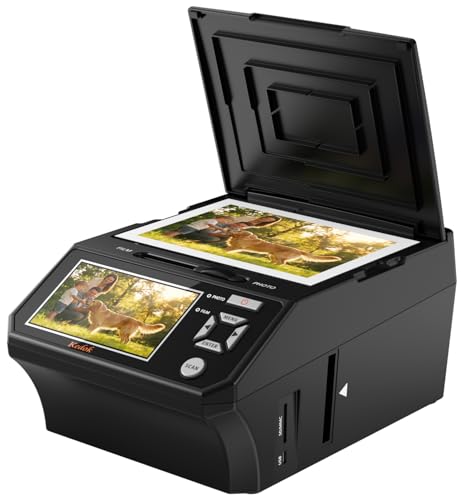
The DigitPro model handles 35mm/110 negatives, slides, 3R–5R photos, and business cards, converting to 22MP JPEGs with a built-in 128MB memory and optional SD card storage (up to 64GB, FAT32/EXFAT). It operates as a standalone device, with a 5” LCD for real-time preview. Best for: households digitizing a variety of old print formats in one pass. Limitation: uses a built-in memory that may fill quickly with large collections; external SD card is helpful for larger scans.
PORTTA Film Scanner With 5″ LCD

The PORTTA scanner offers 16MP or 22MP output options, supports 35mm (135), 126, 110, and Super 8 film, and includes HDMI output for viewing on larger displays. It emphasizes a straightforward workflow with SD card storage and no computer required. Best for: users who want a flexible, no-computer workflow and the option to output via HDMI. Limitation: 22MP mode may require higher-quality cards and careful handling for the best results on older films.
KODAK Slide N Scan Max

The Slide N Scan Max emphasizes a 7-inch tiltable LCD and a robust 13MP sensor for reading film and slides. It doubles as a digital picture frame with preview and gallery mode. Best for: users who want a large viewing area, flexible tilt, and strong preview capabilities. Limitation: smaller sensor resolution compared to some 22MP options may matter for high-detail archiving.
Kodak SCANZA Digital Film & Slide Scanner
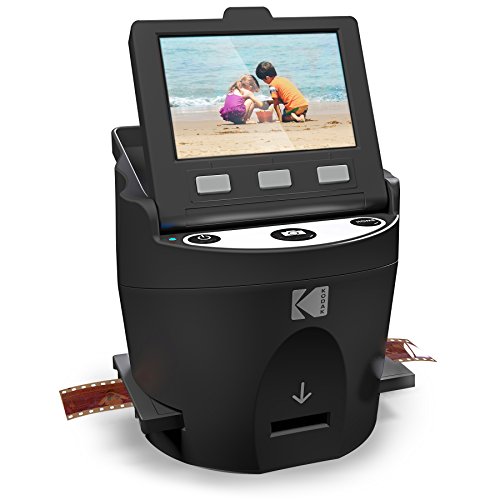
Scanza handles 35mm, 126, 110, Super 8, and 8mm negatives and slides with a 3.5” LCD display. It ships with multiple adapters for fast operation and features one-touch scanning. Best for: users who want a dedicated Kodak workflow with a compact display and easy-insert adapters. Limitation: smaller screen size compared to some 5” or 7” models; may be less comfortable for large sessions without a separate monitor.
Buying Guide: Key Considerations
What film formats do you need to convert?
Check whether the scanner supports 35mm, 126, 110, slides, and Super 8 or 8mm film if you have a mixed archive. Some models focus on a subset; choose based on your collection.
Is a built-in screen important?
Large LCDs simplify alignment and testing. If you frequently show scans to family, a bigger display and gallery mode improve usability and sharing.
Do you prefer standalone operation or computer-assisted workflows?
Standalone units are convenient for quick digitization and require no software. Scanners with computer compatibility can offer RAW-like controls or enhanced editing in your preferred program.
What storage options do you need?
Most scanners save to internal memory or an SD card. If you have many photos, ensure you have ample SD storage or an easy transfer path to a PC or cloud backup.
Image quality expectations
Higher megapixel counts generally yield crisper results, especially for older negatives. Consider the balance between price, resolution, and your intended use (print size, online sharing).
Ease of use and maintenance
Models with one-touch scanning, simple front-facing controls, and included cleaning tools help keep the process straightforward, especially for beginners or infrequent use.
Frequently Asked Questions
- What is a film scanner, and why use one?
- Can these scanners handle both negatives and slides?
- Do I need a computer to use these devices?
- What resolution should I expect from these scanners?
- Is storage capacity a concern?
- Which model is best for beginners?
A film scanner digitizes negatives and slides into digital image files, preserving memories and enabling easy sharing and archiving. It often includes an LCD for preview and may offer direct-to-SD storage.
Most models in this selection support both film negatives (35mm, 126, 110) and slides, with some also handling Super 8 or 8mm film types.
Many are standalone and do not require a computer. Some offer optional USB or HDMI outputs to transfer or display results on a larger screen.
Resolutions range from about 16MP to 24MP in the listed models. Higher megapixels typically deliver more detail, especially for prints or large displays.
Yes. Look for built-in memory and SD card support. For large libraries, prefer models that expand memory via SD cards or external storage.
BEONEGLOBAL ClearScan MINI and similar compact units are often favored by beginners for their intuitive controls and small footprint.
In summary, the right film-to-digital scanner depends on your format range, display preferences, and whether you want a standalone or computer-assisted workflow. The options above balance ease of use, image quality, and storage flexibility to help you efficiently preserve your film memories for the next generation.