Yes, a toddler bike with stabilisers can help little riders gain balance and confidence before graduating to a pedal bike. This guide highlights five suitable options for ages 18 months to about 5 years, focusing on stability, grow-with-kid features, and simple setup. The best pick depends on whether you want a pure balance bike, a 2-in-1 design with removable pedals, or training wheels for added reassurance. The table below compares key traits to help you decide quickly.
| Product | Best For | Typical Age Range | Notable Feature |
|---|---|---|---|
| SEREED Toddler Balance Bike 2 Year Old | Balance-first learners | 2-5 years | Tool-free height adjustments, personalized plate |
| HUWAY Training Wheels Kit | Beginners needing stability | 2-5 years | Universal, lightweight training wheels |
| KEANO Motocross Style 12 Inch Bike | Slow-start riders desiring style | 2-4 years | Training wheels included, number plate, fenders |
| KRIDDO 2-in-1 Balance Bike & Trike | Growth-ready riders | 18 months-3 years | Detachable pedals, stowable training wheels |
| Umatoll Toddler Balance Bike | Indoor/outdoor balance practice | 2-5 years | Tool-free adjustments, air-free tires |
SEREED Toddler Balance Bike 2 Year Old

The SEREED balance bike targets early balance and steering skills with a sturdy carbon steel frame that supports up to 110 lbs. A 12.6-inch starting seat height and safe footrest pad help small riders settle in, while soft saddle and rubber grips support comfortable rides. It is best for two to five-year-olds beginning their balance journey or transitioning from a stroller to a bike. The quick-release mechanism lets parents adjust seat height (12.6-17.1 inches) and handlebar height (19.6-22.5 inches) without tools. The no-pedal design encourages balance-first learning, and the customizable plate with stickers adds a personal touch.
- Best for balance-first learning and quick, tool-free adjustments
- Limitations: No pedals means it’s not a traditional bike, which may delay pedal practice until later
SEREED Baby Balance Bike for 1-2 Year Olds (Green)
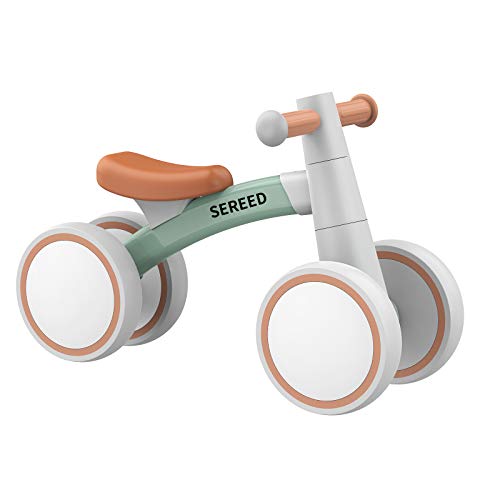
Designed for the youngest riders, this 4-wheel balance bike emphasizes safety and stability. It features a sturdy aluminum alloy frame, a closed wheel design to avoid entrapment, and a 135° turning limit with gravity steering to help prevent tipping. Non-slip, wear-resistant wheels allow indoor or outdoor use. Best for toddlers ages 12-24 months who need a very controlled introduction to moving and balancing, with minimal risk of falls.
- Best for very young learners starting with balance and steering
- Limitations: Very young age requires close supervision and may outgrow quickly
KRIDDO 2-in-1 Kids Tricycle and Balance Bike

This versatile 2-in-1 design combines a tricycle and a balance bike, allowing parents to switch modes as a child grows. It includes a built-in pedal mount, removable pedals, and stowable training wheels for gradual confidence building. It’s best for children aged 18 months to 3 years who benefit from the option to transition from stability to balance focus without buying a second bike. The pedal storage under the rear seat is a standout feature to prevent pedal loss during transitions.
- Best for growth on a single bike with multiple riding modes
- Limitations: Pedal storage adds complexity; not ideal for very young beginners who only want balance practice
Umatoll Toddler Balance Bike

The Umatoll balance bike focuses on a smooth transition from parent-guided rides to independent balance practice. It features a sturdy carbon steel frame, tool-free adjustments for seat and handlebar heights, and air-free EVA tires that don’t require pumping or flattening. This makes it versatile for ages 2 to 5, suitable for both indoor and outdoor riding. It’s best for families seeking simple setup and reliable balance-building with quick height customization as children grow.
- Best for easy, tool-free growth and indoors/outdoors versatility
- Limitations: Balance-only design means pedals are not part of early training
Buying Guide: How to Choose the Right Toddler Bike With Stabilisers
What matters most when selecting a toddler bike is how well it matches your child’s size, development stage, and riding goals. Here are practical considerations:
- Age and skill level: Do you want a pure balance bike, or a model that can convert to a pedal bike or includes training wheels?
- Adjustability: Tool-free height adjustments save time and accommodate rapid growth. Check seat height and handlebar range.
- Safety features: Look for stable frames, puncture-proof or soft wheels, and braking options suitable for toddlers (hand brakes vs. coaster brakes).
- Weight and size: Lighter bikes are easier for kids to maneuver; ensure the bike fits your child’s inseam and reach.
- Durability and materials: Powder-coated steel frames and high-quality tires withstand outdoor use and indoor play.
- Maintenance: Simpler designs with fewer parts reduce maintenance needs and misfiring components.
Frequently Asked Questions
- What age is best for a balance bike with stabilisers? – Typically 18 months to 5 years, depending on balance and coordination development.
- Do balance bikes require pedals? – No, most balance bikes eliminate pedals to focus on balance and steering. Some 2-in-1 models add pedals later.
- Are training wheels safe for beginners? – Training wheels provide extra stability but may limit balance practice; remove them gradually as confidence grows.
- Can a balance bike replace a stroller? – For many toddlers, a light balance bike can substitute for stroller use in short trips once they’re confident with balance.
- Should I prioritize adjustable handlebars or seats? – Both are important; tool-free adjustments and a wide height range help ensure a proper fit as your child grows.
- What is the best option for a growing child? – Look for a 2-in-1 design or a balance bike with future-proof adjustments to minimize the number of bikes you need to buy.