When searching for an LED SAD light box, look for high lux output (10,000 lux is common), UV-free LEDs, adjustable brightness, and convenient, portable design. These lamps aim to boost mood, regulate circadian rhythms, and improve sleep. The top picks below suit different buyers—from busy professionals and shift workers to home office users and travelers. A quick summary table of the five chosen products follows the intro for fast comparison.
| Product | Best For | Key Feature | Format |
|---|---|---|---|
| Verilux HappyLight Lucent | New users seeking simplicity | One-touch operation, 10,000 lux | Flat, portable |
| Verilux HappyLight Lumi Plus | Users wanting adjustable brightness | 3 brightness levels, 1-hour timer | Detachable stand |
| Carex Day-Light Classic Plus | Home offices needing adjustable height | 12-inch distance, full-spectrum LED | Stand-adjustable |
| Circadian Optics Luxy | Travelers and compact-space users | Ultra-compact, 10,000 lux | Foldable, highly portable |
| Verilux HappyLight Luxe | Users wanting color/brightness customization | 4 brightness levels, 3 color temps | Detachable stand, wall mount |
Verilux HappyLight Lucent – One-Touch Light Therapy Lamp
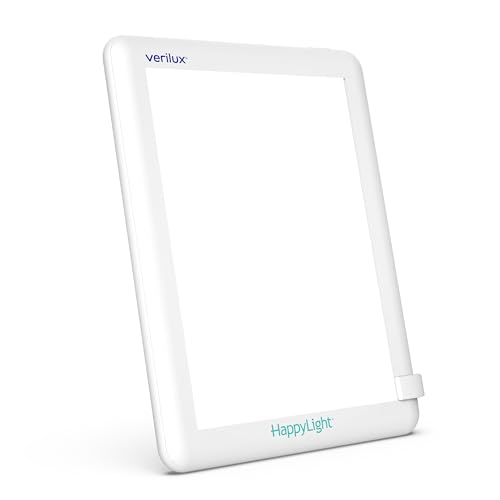
Best for beginners who want a simple, effective light therapy routine. The Lucent delivers up to 10,000 lux of UV-free LED light with a glare-free panel and a detachable stand for home or on-the-go use. It offers a straightforward, one-button operation, making it ideal for individuals who prefer minimal setup. This model supports mood enhancement, improved sleep, and sustained energy levels through daily exposure. A potential limitation is its fixed brightness without adjustable levels, which may be less suitable for users needing customizable intensity.
Verilux HappyLight Lumi Plus – Adjustable Brightness

Best for users who want personalized light exposure. Lumi Plus provides up to 10,000 lux with UV-free LED light and offers three brightness levels plus a countdown timer up to one hour. The adjustable settings help tailor therapy to morning routines, shift-work schedules, or sensitive users who need gentler exposure at certain times of the day. A caveat is that the timer increments are fixed, so very precise timing beyond 15-minute steps isn’t available.
Carex Day-Light Classic Plus – Adjustable Height

Best for home offices and readers who want flexible positioning. The Day-Light Classic Plus delivers 10,000 lux at 12 inches with an adjustable stand for height and angle. This design supports ergonomic placement and comfortable daily use. It uses a glare-free LED panel, reducing eye strain during longer sessions. A potential limitation is that some users may prefer more compact travel options, as the lamp isn’t as portable as smaller units.
Circadian Optics Luxy – Ultra-Compact Lab-Design

Best for travelers and desk-destined users with limited space. The Luxy scales 10,000 lux within a tiny form factor and folds flat for travel. It’s not rechargeable, so you’ll rely on an outlet for power, which is a limitation for some on-the-go routines. Nevertheless, its compact design makes it easy to carry in a purse or briefcase, and it still provides clinically relevant brightness for circadian regulation.
Verilux HappyLight Luxe – Color & Brightness Control

Best for users who want richer customization. Luxe offers up to 10,000 lux with adjustable brightness and color temperature across three HappyHue options, plus a countdown timer up to an hour in five-minute increments. A detachable stand and optional wall mounting add versatility to fit various environments. A limitation is that some users may find the initial setup slightly more complex than single-button units.
Buying Guide: Key Considerations for LED SAD Light Boxes
- Lux Output: Most effective boxes provide 10,000 lux at a comfortable distance. This is a standard for clinically relevant brightness.
- UV-Free LED: Ensure the device emits UV-free light to avoid skin and eye concerns.
- Color Temperature and Brightness: Look for adjustable color temperatures (e.g., cool white to daylight) and multiple brightness levels to match routines and sensitivity.
- Distance and Field of View: Consider how far you sit from the lamp and whether the device directs light broadly or focuses it on the eyes.
- Portability and Setup: Detachable stands, foldable designs, and travel-friendly options help with consistency on the go.
- Timer and Scheduling: Built-in timers and memory features support consistent daily exposure without manual adjustments.
- Ergonomics and Safety: A glare-free panel and stable base reduce eye fatigue and risk of headaches.
FAQ
- What is the typical recommended daily exposure for a light therapy lamp?
Most guidelines suggest 15 to 30 minutes per day at 10,000 lux, depending on sensitivity and schedule. - Will a light therapy lamp help with winter blues?
Yes, regular use can improve mood, energy levels, and sleep quality for many people experiencing seasonal affective symptoms. - Is 10,000 lux safe for daily use?
Yes, when used as directed. UV-free LED models minimize risks; start with shorter sessions if new to light therapy. - Should I choose a portable lamp or a larger one for home use?
Portable lamps are ideal for travel and small spaces, while larger lamps often offer easier placement and steadier exposure at home. - Do these lamps require special installation?
No special installation is needed. Most models simply plug in and are ready to use with a button press or timer. - Can I use a light box in the evening?
Evening use is generally not recommended as it can disrupt sleep for some people; morning exposure is typically advised.