If you need reliable protection against hazardous particles, chemical splashes, or biohazards, these suits are designed to minimize exposure in high-risk environments. This guide highlights five approaches that balance coverage, comfort, and mobility. Best for industrial cleanup crews, lab technicians, emergency responders, and construction workers who require robust, disposable or reusable hazmat gear.
| Product | Best For | Key Benefit |
|---|---|---|
| Medtecs Hazmat Suits (Without Sealed Tape) – S | Biohazard cleanup crews | 360° protection with hood and flexible fit |
| Dräger SPC 4400 CLF Hazmat Suit | Industrial labs and cleaning teams | Front zipper with Velcro and neck strip for safety |
| Medtecs Hazmat Suits (With Sealed Tape) – M | Biohazard and chemical exposure | Sealed tape option for enhanced containment |
| EYCOMTOM Fire Resistant Suit | High-heat environments | Aluminized, flame-resistant protection |
| DuPont Tychem SL 2X | Industrial safety in nuclear/chemical settings | Bound seams and enclosed hood for critical environments |
Medtecs Hazmat Suits Without Sealed Tape — S
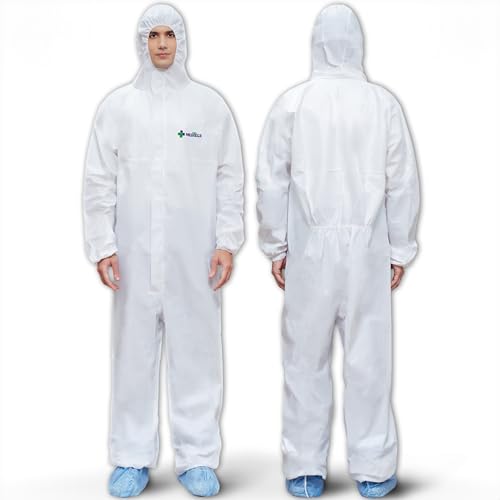
This full-body coverall provides 360-degree protection with an elastic hood, wrists, and ankles for a snug fit. It features a front zipper for easy on and off and is designed for extended wear in protected work zones. The fabric is PPSB laminated with PE film to balance protection with breathability. Best for workers who need reliable coverage while performing repeated entry and exit tasks. Limitation: available in select sizes and may require careful sizing for taller users.
Dräger SPC 4400 CLF Hazmat Suit — Hooded

Designed for maximum safety in hazardous environments, this hooded coverall includes a front zipper with a secure Velcro strip and a neck seal. It is compatible with various respirators and safety gear. Best for industrial settings where a tight seal, integrated neck protection, and compatibility with respirators are critical. Caution: assembly and doffing may require practice to maintain a sterile barrier.
Medtecs Hazmat Suits With Sealed Tape — M
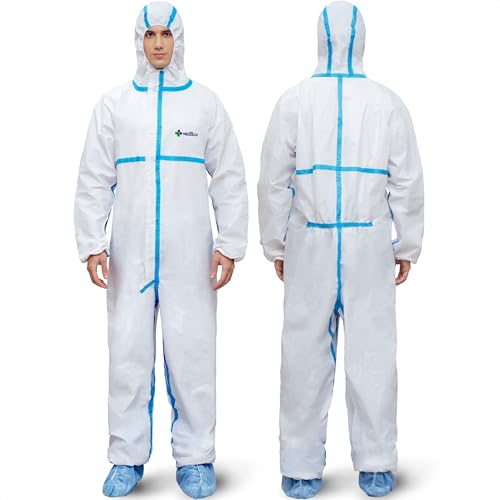
This option adds sealed tape for enhanced containment, useful when chemical or biohazard exposure risk is high. The suit keeps a full range of motion with elastic hood, wrists, and ankles, and a front zipper for easy removal. Best for missions requiring sealed boundary integrity. Limitation: sealing tape may require careful application and inspection before use.
EYCOMTOM Fire Resistant Suit

This aluminized fireproof coverall is designed for high-temperature exposure, offering heat resistance and flame retardancy. Sizes XL and XXL are available to accommodate different body heights. Best for workers near heat sources or open flames where heat protection is essential. Limitation: not primarily designed for chemical splash protection; more suitable for thermal hazards.
DuPont Tychem SL 2X

DuPont Tychem SL 2X provides bound seams and a hooded design for industrial safety in nuclear, chemical, and hazardous environments. It is designed for heavy-duty protection with a focus on barrier integrity. Best for workplaces requiring robust seam protection and chemical containment. Limitation: higher level of protection can reduce breathability and comfort during long shifts.
Buying Guide: Key Considerations for Nuclear and Hazardous Environments
- Protection type: Decide between splash/chemical containment, smoke and heat resistance, or biological protection. Some suits combine several features, while others focus on a single hazard.
- Seam and closure design: Sealed seams and reinforced zippers improve barrier integrity. Consider whether a taped or taped-plus-zipper design fits your workflow.
- Breathability and comfort: Look for materials that balance protection with moisture management and mobility, especially for long wear periods.
- Size and fit: Ensure available sizes cover a range to fit different body heights and body shapes. An elastic hood and cuffs enhance fit and protection.
- Compatibility: If respirators or face protection are used, verify compatibility with the suit’s hood or collar design.
- Usage scenario: For high-heat tasks, prioritize aluminized or heat-resistant materials. For chemical risk, sealed tape and robust seams matter more.
- Donning and doffing: Easy-on/easy-off design reduces exposure during removal, an important factor in cleanup and emergency scenarios.
- Regulatory and standard alignment: Look for suits designed to meet relevant safety standards and classifications for your industry.
FAQ
- What suit is best for chemical splash protection?
Look for full-body coveralls with sealed seams and front zippers designed for chemical containment, such as options with sealed tape and robust seam construction.
- Are aluminized suits suitable for nuclear work?
Aluminized suits are designed for high heat; for nuclear work, prioritize barrier integrity and chemical resistance alongside heat protection where applicable.
- How do I choose the right size?
Check height and torso measurements, and consider elastic cuffs and hood to ensure a snug, protective fit without restricting movement.
- Can I wear respirators with these suits?
Yes, most designs are compatible with safety goggles and respirators; confirm compatibility with your specific model and hood design.
- What is the advantage of sealed tape?
Sealed tape enhances barrier integrity against chemical exposure and biohazards, reducing the risk of seepage through seams.
- How long can I safely wear these suits?
Wear duration depends on the hazard level, material, and ventilation. Follow manufacturer guidelines and work-rest cycles to manage heat and moisture.