Find reliable, hands-on back massagers that don’t rely on batteries or motors. This guide highlights classic, manual tools ideal for daily relief, self-massage, and targeting hard-to-reach spots. Best for: office workers seeking quick neck and shoulder relief, athletes needing post-workout knot release, and anyone who prefers low-friction, hands-on massage options.
| Product | Brand | Why It’s Right For You |
|---|---|---|
| BioSwiss 2-Pack Handheld Full Body Massager | BioSwiss | Versatile with large and small heads for back, neck, and shoulders; works with or without oils. |
| Ranarose Deep Tissue Back & Neck Massager | Ranarose | Two-sided cane design targets trigger points; eight nodes for full-body relief. |
| Melonsun Palm Massage Tool | Melonsun | Four-point handheld design for pinpoint deep-tissue relief; adjustable pressure. |
| LiBa Back and Neck Massager | LiBa | Trigger-point massager with a flexible reach for neck to feet; compact design. |
| Body Back Buddy Classic | Body Back | Dual hooks and knobs for broad back and shoulder coverage; full-body relief. |
Note: The selections emphasize classic, non-electrical or low-complexity tools that are easy to use at home, in the office, or while traveling. Each option is chosen for target-specific pain relief, portability, and straightforward design.
BioSwiss 2-Pack Handheld Full Body Massager

The BioSwiss massager offers a two-pack with one large and one small head. Four legs glide across skin, easing tension in the back, neck, and shoulders. It’s compatible with or without oils and creams. The palm-sized grip supports comfortable control for self-massage.
Best for: buyers who want a simple, versatile set for home or office use. Consider the large head for broader areas and the small head for precision on tight knots. Limitation: manual use requires some grip strength and control for harder pressure.
Ranarose Deep Tissue Back & Neck Massager

This two-sided cane massager is designed to reach pain-trigger points and deep tissue across the body. Eight massage nodes target knots and spasms, improving circulation and relief from fibromyalgia-like pain. Weighing under a pound, it’s easy to maneuver for self-massage.
Best for: individuals seeking deep trigger-point relief with precise pressure. Choose this if you want enhanced reach in hard-to-reach areas. Caution: the design relies on user-applied pressure—not electric—so effectiveness depends on technique and comfort with manual pressure.
Melonsun Palm Massage Tool

This four-point handheld massager focuses on pinpoint deep tissue relief for neck, back, shoulders, and between the shoulder blades. The palm-fit design allows the user to control pressure and target trigger points without needing a partner. It’s especially suitable for desk workers and athletes after workouts.
Best for: those who want direct, adjustable manual pressure with immediate feedback. Limitation: no heat or electric assistance; benefit relies on user technique and endurance for deeper pressure.
tuuli Back Massager With Smooth Ball Rollers
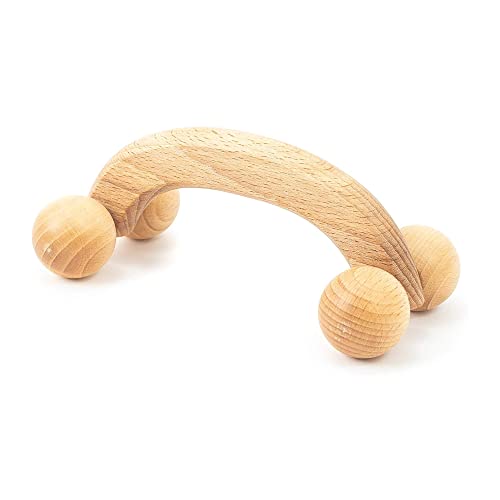
tuuli’s wooden back roller emphasizes natural wood therapy. It is designed to ease muscle tension across the cervical spine, back, and lumbar region. The design also suggests potential skin-health benefits through improved circulation and lymphatic flow.
Best for: users who prefer wood-based tools and want a broader roll across the back. Limitation: wood therapy tools can be less forgiving on very sensitive skin or acute injuries; avoid on broken skin or open wounds.
LiBa Back and Neck Massager

The LiBa massager uses a trigger-point massage tool design to target pain in the neck through the feet. It’s compact, offering full-body reach with refined pressure control for self-massage routines.
Best for: people seeking a lightweight, all-in-one tool for neck to lower back and legs. Caution: the shape can feel awkward for beginners; practice grip and leverage to maximize effectiveness.
Body Back Buddy Classic

The Body Back Buddy includes two hooks and 11 knobs across three shapes, enabling precise leverage for trigger points and broad surface areas. It’s marketed as a complete tool for full-body pain relief, capable of addressing back, neck, shoulders, and more with multiple grip options.
Best for: users who want a versatile manual tool with multiple pressure points and grips. Limitation: can require more arm strength and practice to apply even pressure across large areas.
Buying Guide: Key Considerations For Choosing An Old School Back Massager
- Purpose and target area: Choose a tool designed for the primary pain points—neck, shoulders, back, or full-body. For trigger points, look for nodes or hooks that concentrate pressure.
- Pressure control: Manual massagers require user-applied pressure. If you need variable pressure without fatigue, prefer tools with ergonomic grips or multiple heads.
- Portability: For travel or on-the-go relief, select compact, lightweight designs. Larger tools suit at-home routines with more surface area coverage.
- Material: Wood and traditional plastics appeal to fans of natural textures. Metals and high-density plastics generally offer durability and precise control.
- Safety and warming features: Some models include heat or infrared options; use heat cautiously and follow safety guidelines to avoid burns.
- Skill level: More complex shapes (knobs, hooks, multi-grip designs) may require practice to maximize effectiveness.
Frequently Asked Questions
- What is an old school back massager best for?
Answer: They’re best for users who prefer hands-on, portable tools to target tight muscles, knots, and trigger points without motors or electronics. - Do manual massagers work as well as electric ones?
Answer: They provide direct control and can be highly effective for relief when used correctly, but electrical massagers may offer deeper or sustained pulses in some cases. - How should I choose between heads and hooks?
Answer: Heads provide broader coverage; hooks and knobs allow targeted pressure on knots. Start with broader coverage and progress to targeted points as needed. - Is there a risk with applying too much pressure?
Answer: Yes. Start light, increase gradually, and avoid bone areas or joints. Stop if you feel sharp pain or bruising. - Can you use these tools daily?
Answer: Yes, many people use them daily for maintenance. Listen to your body and rest if you experience soreness that lasts beyond a massage session. - What should I consider for travel compatibility?
Answer: Look for compact, lightweight designs with simple grips. Wooden rollers and smaller massagers are typically easiest to pack.