Delta blues resonator guitars offer a distinctive, gritty, and loud tone that cuts through a blues lineup. This guide highlights five solid options that suit different players—from beginners seeking a welcoming entry point to seasoned players chasing authentic sustain. The top picks emphasize metal and wooden resonators, different body styles, and built‑in electronics for stage use. Read on to find the best resonator guitar for your blues style and playing environment.
| Product | Best For | Key Benefit |
|---|---|---|
| Gretsch G9200 Boxcar Round-Neck | Acoustic blues players seeking warm mahogany | Eastern European hand-spun cone for classic roundneck tone |
| Gretsch G9201 Honey Dipper Round-Neck | Blues players who prefer a brighter brass body | Brass body with biscuit cone for a punchy, cutting voice |
| NOYEEOENY 40-Inch Spruce Top, Tiger Flame | Beginner to intermediate players | Spider cone design for loud, rich tone |
| Pyle Resophonic Acoustic Electric Guitar | Stage players needing built‑in amplification | Includes built-in preamp and accessories |
| Gosila Resonator Electric Guitar | Electric-savvy players seeking versatile blues tones | Acoustic-electric with resonator build |
Gretsch G9200 Boxcar Round-Neck Resonator Guitar

The Gretsch G9200 Boxcar Round-Neck is a mahogany-bodied resonator with a Padauk fingerboard and an Eastern European hand-spun cone. This model emphasizes a smooth, warm acoustic voice suitable for traditional blues phrasing. Best for players who favor a classic roundneck feel and a natural, mid‑scooped resonance for fingerpicking or chordal blues.
Best for: Acoustic blues players who want a traditional roundneck, wood‑based tone. The handcrafted cone contributes to a balanced bass and midrange, with clear highs.
Limitation: As a purely acoustic model, it lacks onboard electronics for amplification on stage without a separate pickup system.
Gretsch G9201 Honey Dipper Round-Neck

The G9201 Honey Dipper features a brass body paired with a Padauk fingerboard and a biscuit cone. The brass construction yields a distinct, brighter attack with strong projection, making it a good choice for blues players who want more bite for onstage tones. It suits players who favor forward‑driven rhythm parts or single‑note lines with a cutting edge.
Best for: Blues players who want a brighter voice and stronger presence in the mix. The brass body helps emphasize clarity and sparkle.
Caution: Brassy, bright tones may overwhelm delicate fingerpicking; pairing with lighter picking dynamics helps control the volume.
NOYEEOENY 40-Inch Spruce Top, Tiger Flame
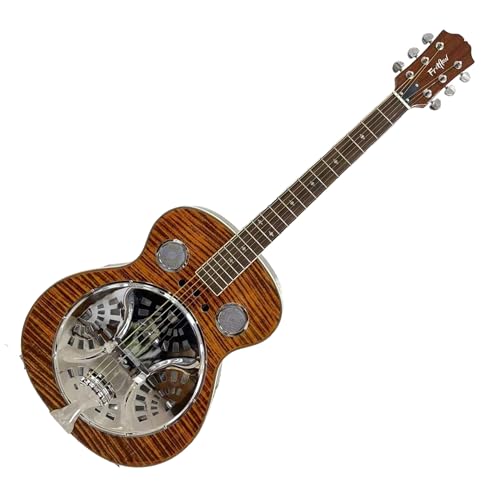
This NOYEEOENY model uses a spider cone resonator design for a loud, rich tone, paired with a spruce top and sapele body. It is a solid option for beginners or players exploring a resonator with easy projection and a classic blues sound. The light‑weight build supports comfortable longer practice sessions and moderate stage use.
Best for: Beginners or players seeking a robust, affordable entry into resonator blues with easy playing dynamics.
Limitation: As a beginner guitar, it may not offer the same nuanced dynamic range as higher‑tier models, particularly for subtle fingerstyle blues.
Pyle Resophonic Acoustic Electric Guitar

The Pyle Resophonic is an acoustic‑electric six‑string resonator with a mahogany body, built‑in preamplifier, and included accessories. It’s designed for players who want to plug in for live performances without adding external microphones. The presence of a built‑in EQ offers flexible tone shaping for blues gigs, rehearsals, and lessons.
Best for: Stage players who require a complete all‑in‑one kit and onboard electronics for amplified blues performances.
Limitation: The all‑in‑one setup may be heavier and bulkier than a simple acoustic resonator, affecting portability for some players.
Pyle Electro Resophonic Acoustic Electric Guitar Set

The Pyle Electro Resophonic kit includes a built‑in preamp, a gig bag, spare strings, a detachable strap, picks, and a tuner. It’s a complete package for beginners and intermediate players who want immediate stage readiness. The mahogany body with spruce top offers a balanced tone suitable for blues rhythms and melodies, and the built‑in electronics enable straightforward amplification.
Best for: Buyers seeking an all‑in‑one resonator set with built‑in electronics for practice and performances.
Caution: The included accessories are functional but may not meet every touring professional’s equipment standards; upgrades can be considered later.
Gretsch G9210 Boxcar Square-Neck Resonator

The G9210 Boxcar Square-Neck uses a mahogany body and Padauk fingerboard with a hand‑spun cone, delivering a resonant, blues‑forward voice suited to slide and chordal blues. This square‑neck option appeals to players who prefer a broader tone with rich projection and a sturdy feel for rhythm or bottleneck playing.
Best for: Players seeking a square‑neck resonator with a warm, direct blues voice and strong projection.
Caution: The square neck may feel unfamiliar to round‑neck players accustomed to typical acoustic guitar shapes.
Gosila Resonator Electric Guitar

The Gosila resonator combines a Sapele body with an Okoume neck and metallic resonator, offering an electric‑available experience. This model is aimed at players who want a traditional blues resonator feel with the versatility of an electric signal path for effects and amplification in live settings.
Best for: Electric‑savvy blues players exploring a resonator with amplification and effects potential.
Limitation: As an electrified instrument, it may require careful setup to balance magnetic pickups with the resonator’s natural acoustic character.
Buying Guide
- Body material matters: Mahogany bodies tend to yield warm, balanced tones with pronounced mids, while brass or metal bodies offer brighter, more cutting voices. Choose according to whether you want a smooth blues ballad sound or a punchier stage presence.
- Resonator design: Round necks are comfortable for fingerstyle and rhythm; square necks suit slide and lap use. Select based on playing style and comfort with neck profile.
- Cone type: Hand‑spun cones and biscuit cones differ in brightness, sustain, and projection. A hand‑spun cone can provide a more nuanced vintage tone, while a biscuit cone often yields a brighter attack.
- Electronics: Onboard preamps simplify live amplification. If performance requires mobility, opt for models with built‑in electronics and tuning controls; otherwise, plan for a separate pickup system.
- Beginner vs. pro use: Beginners benefit from ready‑to‑play packages with cases and accessories. More advanced players may prioritize tone woods, neck feel, and resonance over included extras.
- Play style: If you favor loud blues riffs and slide, consider models with stronger projection (e.g., brass or spider/cone designs). For softer blues, select wood‑top resonators with a warmer midrange.
FAQ
- What makes a resonator guitar good for delta blues? A resonator guitar with strong projection, clear mids, and a bitey high end helps punch through a blues ensemble and deliver classic slide or fingerstyle blues tones.
- Round neck or square neck for blues? Round necks are versatile for all‑around blues, while square necks excel at lap use and bottleneck slides, producing a more expansive, vocal tone.
- Do I need electronics on a resonator? For live amplification, built‑in electronics simplify setups. For home playing, a mic or pickup can be added later.
- Which wood type should I choose? Mahogany delivers warmth; brass or metal bodies provide brightness and projection; spruce tops add snap and sparkle on some models.
- Are resonator guitars harder to play? They can require initial adaptation, especially if switching from a standard acoustic. The action and neck feel vary; test multiple models if possible.
- Is a beginner package sufficient for blues gigs? For casual performances or practice, a complete package can work. For frequent live gigs, consider models with reliable electronics and durable hardware.