Answering buyers seeking a versatile back bending bench for yoga, stretching, or spinal decompression. These options suit beginners building flexibility, athletes needing targeted extension, and at-home users seeking durable, space-saving gear. The following picks emphasize ergonomic design, stable construction, and clear spine-alignment benefits.
| Product | Best For | Key Benefit | Notes |
|---|---|---|---|
| PMT Medical Flex | Yoga Practitioners | Customizable height for personalized poses | Premium wood, ergonomic design |
| Whale Therapeutic Stretching Bench | Full-Body Mobility | Natural spinal elongation and multi-grip options | Made in USA, wooden spine support |
| Sunny Health & Fitness 45-Degree Hyperextension | Core and Lower Back | Focused hyperextension with height adjustability | Solid frame, comfortable padding |
| Garvee Adjustable Home Roman Chair | Back Extension & Core | Multi-angle back extension with foldable base | Anti-slip feet, sturdy steel |
| Stamina InLine Back Stretch Bench System | Decompression Therapy | Traction-based spine and joint decompression | Foam padding, easy crank |
PMT Medical Flex Back Bench

Best for: yoga practitioners who want precise spine support and adjustable height. PMT Medical Flex uses high-quality wooden construction and contoured design to promote proper posture during stretches. It supports customizable heights to align with different poses and user heights, reducing strain on the lower back during grand arches or backbends. The wooden build adds natural rigidity for stability during dynamic movements.
Why selected: The combination of ergonomic contouring and adjustable height makes it easier to find a safe back-bending position across various yoga flows. It is a durable, eco-friendly option for regular practice. A potential limitation is that wood can be heavier and less portable than some metal frames.
LifePro SculptTrainer Roman Chair

Best for: users seeking a versatile, all-in-one back extension and core training bench. The SculptTrainer supports multiple exercises including back extensions, hip thrusts, squats, and sit-ups, with ten height positions and a stable powder-coated steel frame capable of handling up to 330 lbs. It folds for storage, which helps in space-limited home gyms.
Why selected: Its broad exercise scope and stable construction make it a practical choice for a variety of back, glute, and core workouts. Caution: ensure you are comfortable with assembly and the chair’s footprint before committing to a full routine in a small space.
Whale Therapeutic Stretching Bench

Best for: users seeking a natural spine elongation with adjustable grip positions for targeted stretches. This wooden spine stretcher emphasizes a curved design to open the chest and release tension along the entire spine. Multi-grip options allow personalization of intensity for upper and lower back work, making it well-suited for daily mobility routines or postural correction.
Why selected: The curved, wooden frame supports a safer, deeper stretch and the multiple grip points help tailor intensity. Limitation: as with many wooden stretch benches, it may require mindful setup to ensure alignment with individual flexibility levels.
Sunny Health & Fitness 45-Degree Hyperextension
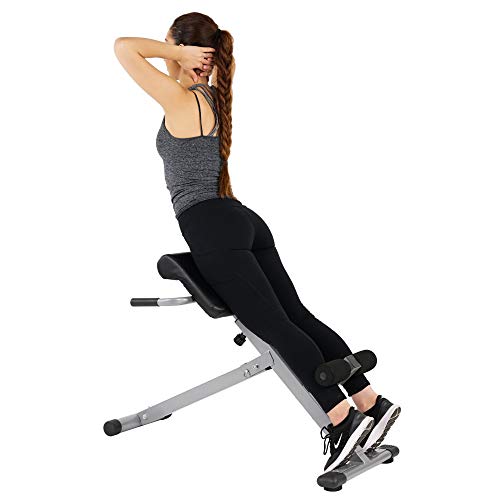
Best for: home gym users who want a dedicated 45-degree back extension with comfortable padding. This unit includes a high-density foam hip pad, non-slip handlebars, and a sturdy alloy steel frame. Height adjustments are straightforward, making it suitable for a range of body heights and workout styles, from back extensions to core work.
Why selected: It provides a clear, targeted back extension path with durable construction and affordable pricing. Caution: check the footprint in your space since folding and storage may require room for safe operation.
Garvee Adjustable Home Roman Chair

Best for: users who want multi-angle back extension with solid stabilizing features. The Garvee chair offers 15°-45° tilting with dual backrest height settings. Its thick steel frame and anti-slip base support a combined focus on back and core muscle development through back extensions, hip thrusts, and sit-ups. It is designed to be space-efficient when folded.
Why selected: The multi-angle adjustment supports progressive training and better form across routines. Caution: ensure you can set up and store the unit safely in your available space, especially in smaller rooms.
Buying Guide
- Intended use: Decide if you want a device primarily for yoga backbends, overall core work, or spinal decompression. Some benches prioritize gentle stretching, others target deeper spinal extension or compound movements.
- Adjustability: Look for adjustable height, angle, and backrest settings. This ensures compatibility with your height and different poses or exercises over time.
- Construction materials: Wooden frames offer natural rigidity and a warmer feel, while steel provides heavier-duty support and longer life in high-use settings. Consider weight capacity and stability.
- Footprint and storage: Measure space and consider foldable designs if your home gym has limited room. A compact, stowable bench helps sustain regular use.
- Comfort features: Padded surfaces, ergonomic contours, and grip options influence how long you can train without discomfort or tension in the hips, spine, or shoulders.
- Safety and form: Prioritize devices with secure supports, non-slip bases, and clear alignment cues to minimize risk during back bends and decompression.”
FAQ
- What is a back bending bench best used for? It supports controlled spinal extension, back stretches, hip hinging, and can facilitate posture work or decompression therapy.
- Can beginners use these benches safely? Yes, but choose models with adjustable angles and heights to start with shallow back bends and gradually increase intensity.
- Which bench is best for a small home gym? Look for foldable or compact designs, such as the LifePro SculptTrainer or Garvee Adjustable Roman Chair, which offer space-saving storage options.
- Do these benches replace a trainer or physical therapy? They can support routines but should not substitute professional medical advice for injuries or serious spine conditions.
- Is wood or metal better for long-term use? Wood provides natural rigidity and warmth; metal frames tend to be sturdier for repeated, heavy use.
- How do I choose the right angle? Start at a gentle 15°–30° range and increase only as flexibility and comfort allow, maintaining proper spinal alignment.