Answering the top questions buyers have when selecting senior horse feed: these products are designed to support older horses needing easy chewing, gentle digestion, and steady weight. They’re best for aging, underweight, or performance horses with dental or metabolic concerns. The following options emphasize high fiber, controlled starch, and added fats to help maintain weight and vitality. Below, you’ll find five well-suited picks, each with who it’s best for and a concise justification.
Summary table of selected products:
- Triple Crown Senior Horse Feed (Bluebonnet Feeds) — Best for mature or underweight horses needing beet pulp-based nutrition.
- Manna Pro Weight Accelerator for Senior Horses — Best as a calorie/topper for aging horses needing quick weight gain.
- Purina Enrich Plus Senior Ration Balancing Feed — Best for balanced nutrients with prebiotics and gastric support.
- Triple Crown Senior Gold Premium Horse Feed — Best for active older horses needing weight gain and gastric buffering.
- Kalmbach Tribute Maturity Textured — Best for low NSC and high-fiber needs with easy digestion.
Triple Crown Senior Horse Feed, High Fat and High Fiber
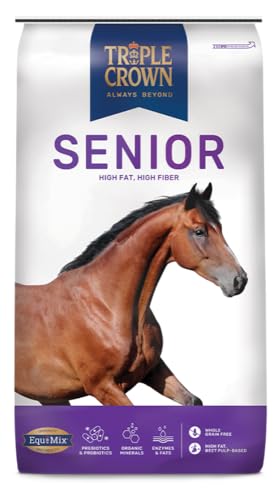
This beet pulp–based senior feed emphasizes high fat and fiber to support digestive health and weight maintenance. It is suited for mature horses, performance animals, and those that are underweight due to age. The formulation aligns with lower starch and sugar levels to help manage metabolic concerns while delivering essential nutrients. Best for seniors needing easier digestion and steady weight gain without excessive grain loads.
Best for: Mature or underweight senior horses needing improved digestion and weight support. Limitations: May require adding additional minerals or supplements to meet all micronutrient needs depending on hay quality.
Manna Pro Weight Accelerator for Senior Horses

This top-dress supplement provides high-fat calories to help aging horses gain or maintain body condition. It includes omega-3 fatty acids from flaxseed to support skin, coat, and overall vitality. Probiotics and biotin-based hoof support are included to assist digestion, immunity, and hoof strength. Choose this for a targeted calorie boost without overhauling the entire diet.
Best for: Seniors needing extra calories and improved coat condition. Limitations: It is a supplement, not a complete feed, so it works best when fed with a balanced base ration.
Purina Enrich Plus Senior Ration Balancing Feed

Enrich Plus Senior balances senior nutrition with ACTIVAGE prebiotic technology to support immune function and metabolism, plus OUTLAST gastric support to aid digestion. The easy-soak pellet technology helps create a palatable mash quickly, which is advantageous for horses with dental issues or picky appetites. This is a comprehensive option for owners seeking a complete feed with digestive and immune support.
Best for: Active seniors needing a balanced ration with digestion and gastric support. Limitations: Some horses may require adjustments to water intake when using the mash form.
Triple Crown Senior Gold Premium Horse Feed

This premium senior feed emphasizes energy-dense nutrition with high fat from soy oil, rice bran, and flaxseed. It supports weight gain and steady energy for mature and performance horses. It also includes seaweed-derived calcium aimed at gastric buffering to reduce ulcer risk. Best for age-active horses needing more energy without increased starch.
Best for: Active or growing older horses needing additional energy and gastric buffering. Limitations: Higher fat content may require monitoring to avoid over-conditioning in less active horses.
Kalmbach Tribute Maturity Textured for Horse
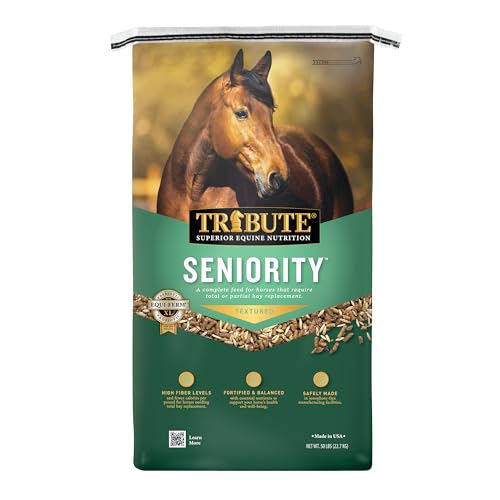
No corn formula and lower NSC (sugar and starch) characterize this textured feed, offering highly digestible fiber and an amino acid/mineral balance tailored to aging and muscle maintenance. It is a complete feed option that supports seniors who require a gentle, low-starch diet with good holistic nutrition. Best for horses sensitive to starch or those needing steady, gradual energy.
Best for: Seniors with metabolic or digestive concerns seeking a complete, low-NSC option. Limitations: Some horses may prefer a pelleted form over textured feed, depending on mouth condition.
Buying Guide: Senior Horse Feed Essentials
- Digestive health first: Look for high-fiber, low-starch formulations to support gut health and stable energy without spikes in blood sugar.
- Weight maintenance: Choose feeds with added fats and caloric density, especially for underweight seniors or those with limited grazing.
- Dental compatibility: If chewing is limited, consider easy-to-chew pellets, mash, or complete feeds with softened textures.
- Immune and joint support: Prebiotics, probiotics, omega-3 fatty acids, and vitamins can help aging horses’ overall vitality and mobility.
- Metabolic considerations: For horses with insulin resistance or PPID risk, prioritize NSC control and avoid excessive concentrates.
- Form and practicality: Pellets versus textured feeds; whether a mash is needed; how easily the horse consumes the product given dental health.
- Feeding plan: Pair feed with good-quality forage, consider gradual transitions to prevent GI upset, and adjust based on body condition scoring.
FAQ
- What makes senior horse feed different from regular horse feed? Senior feeds emphasize digestible fiber, lower starch, higher fat, and often added nutrients to support aging bodies and dental health.
- Is a supplement enough, or should I use a complete feed? If the senior horse struggles with chewing or digestion, a complete feed tailored for seniors may be preferred, but some horses benefit from a base ration plus targeted supplements.
- How do I choose between pelleted and textured senior feeds? Pelleted feeds can be easier to chew or soak for dental challenges; textured feeds may be preferred for horses that enjoy variety and texture.”
- Can these feeds help with weight gain? Yes, feeds with higher fat and caloric density, plus limited starch, are designed to support weight gain when paired with good forage.
- What should I monitor after switching to a senior feed? Watch body condition, coat quality, digestion indicators (stool consistency, gas), and any signs of colic or ulcers. Adjust gradually over 7–14 days.
- Should I consult a veterinarian for a feeding plan? For horses with metabolic issues, jaw problems, or significant weight changes, professional guidance is recommended.