Stainless steel sheet mesh combines durability, corrosion resistance, and precise pore sizes for a wide range of applications—from vent screens and filters to crafts and architectural projects. The following selects five reliable options from popular brands, aimed at American DIYers seeking sturdy, cut-friendly mesh with consistent openings. Each product is described with its key features to help you compare suitability for your project.
| Product | Mesh Size | Material | Typical Use |
|---|---|---|---|
| Valchoose Soft 304 Mesh, 8 Pack | 20 mesh, 1 mm aperture | 304 Stainless Steel | DIY vents, cages, lightweight screens |
| CHAYUFUN 304 Wire Mesh Screen | 20 mesh, 1 mm aperture | 304 Stainless Steel | Vent screens, cages, DIY projects |
| YUKKOEOQ 4 Pcs 13×9, 20 Mesh | 20 mesh, 1 mm aperture | 304 Stainless Steel | Crafts, vent covers, garden protection |
| Serqd 304 Wire Mesh Screen, 6 Pack | 20 mesh, 0.04″ aperture | 304 Stainless Steel | Cages, vents, filtration |
| Valchoose 4PACK Stainless Steel Mesh | 20 mesh, 1 mm aperture | 304 Stainless Steel | Air vents, rodent protection |
Valchoose Soft 304 Stainless Steel Mesh — 8 Pack

The Valchoose Soft 304 mesh comes in an 8-pack of plain weave panels, each measuring 8.3 by 11.8 inches. With a 1 mm aperture and 0.3 mm wire diameter, it offers 52% open area and notable flexibility. The material is 304 stainless steel, providing corrosion resistance in varied climates. It is designed to be cut with scissors and shaped into circles, triangles, or squares, making it suitable for DIY vents, cages, garden screens, and window barriers. The mesh performs well under high-temperature exposure and resists acids and alkalis.
CHAYUFUN 304 Stainless Steel Wire Mesh Screen — 15.7 X 59 Inches

This large-format mesh features a 15.7 by 59 inch sheet with 1 mm holes and 0.3 mm wire diameter, crafted from premium 304 stainless steel. It is described as easy to cut and shape, making it suitable for vent screens, window guards, cages, and various DIY projects. The product emphasizes a dense, uniform weave, high durability, and stability when cut to custom sizes, though care is advised to handle sharp edges with gloves.
YUKKOEOQ 4 Pcs 13×9, 20 Mesh Stainless Steel Sheet
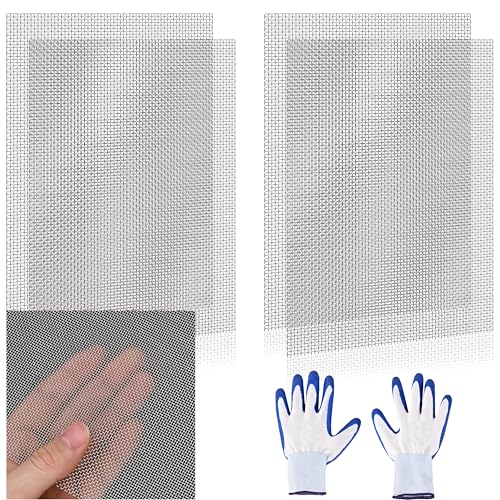
These four sheets measure 13 by 9 inches and provide a 20-mesh, 1 mm aperture configuration in 304 stainless steel. They are positioned for DIY crafts, vent covers, and garden fencing. The set includes caution about sharp edges and recommends gloves during unpacking and cutting with a sharp tool to achieve precise shapes. The 304 alloy yields strong resistance to corrosion and weather effects while maintaining form under use.
Serqd 304 Stainless Steel Wire Mesh Screen — 6 Pack

Each Serqd pack contains six pieces of 11.8 by 8.2 inch mesh, with 20 mesh and 0.04 inch aperture. Constructed from 304 stainless steel, the mesh resists rust and corrosion, and withstands heat up to 1490°F (810°C). It is easy to cut and shape for various DIY applications, including ventilation, filtration, and light-duty screening. The design emphasizes airflow, filtration efficiency, and durability in outdoor or harsh environments.
Valchoose 4PACK Stainless Steel Woven Wire Mesh

This 4-pack features 11.8 by 8.2 inch panels, 1 mm openings, and 0.4 mm wire diameter. Constructed from 304 stainless steel, the mesh is designed for rigidity and durability, with 52% open area for adequate airflow. It is described as easy to cut with tin snips and suitable for vent holes, fan grills, and rodent prevention in vents and windows. The packaging focuses on uniform weave and resilience in challenging environments.
Valchoose 1 Piece Woven 304 Stainless Steel Mesh

Valchoose offers a single, large woven 304 stainless steel mesh panel sized 14.6 by 11.4 inches, with 20 mesh, 1 mm aperture, and 0.4 mm wire diameter. Designed to be cut and bent into various shapes, it provides rigidity and durability for vents, BBQ filters, windows, and outdoor applications. The 304 alloy ensures high resistance to rust and corrosion, plus heat tolerance, making it a versatile option for a range of projects.
Buying Guide
Key purchase considerations help ensure you choose the right stainless steel sheet mesh for your project. The following perspectives cover material quality, mesh size, sheet size, ease of cutting, and safety.
- Material and corrosion resistance: All selected options use 304 stainless steel, known for good corrosion resistance in many environments, including moisture and outdoor exposure. If you expect harsher chemical conditions, verify alloy quality and passivation.
- Mesh size and open area: Common 20 mesh with 1 mm openings provides a balance of airflow and barrier strength. Smaller openings block finer pests, while larger openings offer better ventilation. Check the open area percentage to estimate airflow.
- Sheet size and flexibility: Larger sheets simplify covering bigger areas but can be harder to maneuver. Packs of smaller panels enable modular coverage. Consider whether you need easy bending or rigid mounting.
- Cutting and shaping: Look for meshes described as easy to cut with tin snips or scissors. Edge safety is important; use gloves when handling cut pieces to prevent cuts from sharp edges.
- Intended use and safety: For vent or filter applications, ensure the mesh is non-reactive, heat-tolerant, and won’t shed fibers. If used near food or indoors, ensure the surface is smooth and non-toxic after cutting and shaping.
- Durability and maintenance: A robust 304 stainless steel mesh resists rust, weathering, and grime. Consider whether you need wipe-clean surfaces or if occasional replacement is acceptable for your project.
- Cost and value: Compare per-panel or per-sheet cost, factoring in the need for trimming or extra pieces for replication. Bulk options may provide savings for larger projects.
In sum, for American DIY enthusiasts, selecting a 304 stainless steel mesh with a practical mesh size (around 20 mesh, 1 mm opening) and manageable sheet dimensions typically yields the best balance of airflow, protection, and workability. Always wear protective gloves when handling cut edges and double-check measurements to avoid mismatches in vent openings or filter housings.