The 2″ PVC manifold is a versatile fitting used to split or combine flow in residential and small commercial projects. This guide highlights five reliable 2″ PVC manifold options, focusing on clear construction, practical use cases, and potential limitations. Each product is evaluated for who should buy it and why it stands out. Use this article to compare port counts, slip or barb connections, and flow-through designs before purchasing.
Product Comparisons At A Glance
- Waterway Manifold 672-7150 — 2″ slip to 2″ spigot, six 3/4″ barbs
- Waterway Plastics 672-7140 — 4-port, 2″ x 2″ x 2″ slip, flow-through
- Waterway Plastics 672-7120 — 6-port, 2″ x 2″ slip, 3/4″ barb
- Pushglossy DWV Double Wye — 2″ adaptables with 45° branches
- Waterway Plastics 672-8000 (Wye) — 2″ slip-wye configuration
Manifold 2″S X 2″Spg X (6) 3/4″Barbs 672-7150

Best for high-port applications where multiple branches must feed a central line. This Waterway manifold provides six 3/4″ barb outlets off a 2″ main. Best for small-diameter branch connections in compact systems. A caution: explicit flow ratings are not listed here, so verify system pressure compatibility before installation.
DIY enthusiasts and small HVAC or irrigation setups needing multiple 3/4″ branches from a single 2″ main. Why selected: It offers a straightforward, multi-port distribution with a compact footprint and simple barb connections.
Waterway Plastics 806105121257 2″ S X 2″ Spg X (4) 3/4″ Barbs Manifold

An ideal choice for mid-size branch networks, offering four 3/4″ barbs on a 2″ main. Its flow-through design can help reduce turbulence at junctions. Beware: the listing emphasizes basic features; ensure your fittings match 3/4″ barb hose clamps and verify slip vs. socket compatibility in your project.
Best for: Small irrigation or spa/plumbing projects needing four outlets. Why selected: Clear port count and a balanced 2″ x 2″ footprint.
Waterway Plastics 806105121233 Barb Manifold 2″ x 2″SW x 6-3/4″
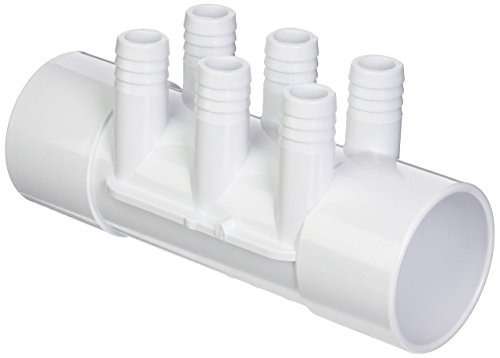
Best for compact spaces requiring six branch connections, with 6 ports and a 2″ slip x 2″ slip interface. This Waterway model is designed to maximize discharge paths with a robust 3/4″ barb network. Limitation: “SW” slip connections should be confirmed compatible with your pipe schedule and adhesive method before glue-in.
Who it’s for: Systems needing multiple 3/4″ branches from a small main. Why selected: Higher port count in a tight footprint.
Pushglossy 2 Pcs 2 Inch Hub PVC DWV Double Wye

Best for drainage and venting networks where a Y-shaped branch is needed to minimize turbulence. The double Y design helps distribute flow to multiple directions with reduced blockage risk compared to a traditional 90-degree tee. Limitation: Designed for DWV applications; pressure-bearing capacity should be verified for non-drain uses.
Best for: Drainage, waste, and vent systems with multiple branches. Why selected: 45° branch angles reduce turbulence and improve drainage efficiency.
Waterway Plastics 806105121370 2″ S X 2″ S X 2″ S Manifold Wye

Best for distributing flow evenly when three 2″ lines converge or diverge. The Wye configuration supports smoother flow transitions than a standard T-junction. Caution: verify the exact port arrangement and slip type to ensure a proper fit with existing pipes and adhesives.
Who it’s for: Projects requiring a tri-directional 2″ connection in a compact layout. Why selected: It provides a clean Wye distribution with clear labeling and a dependable 2″ main.
Buying Guide
What to consider when choosing a 2″ PVC manifold
- Port count and layout: Decide how many branches you need and whether you prefer slip, barb, or mixed connections.
- Connection type: Slip (socket) connections require solvent cement; barb connections need clamps. Ensure compatibility with your piping system.
- Flow direction: Flow-through designs minimize turbulence; dead-end manifolds trap flow and can increase backpressure.
- Material and schedule: PVC Schedule 40 is common for DWV and light plumbing; verify pressure and temperature ratings for your application.
- Physical footprint: A larger port count often means a larger footprint. Match size to space constraints in the installation area.
- Application fit: Water distribution versus drainage and venting require different design considerations—choose based on whether you need a Y, dead-end, or standard manifold.
How to compare options quickly
- Best for many branches: Look for 6-port manifolds with 3/4″ barbs when you need multiple small outlets.
- Best for compact spaces: Choose 2″ x 2″ x 2″ slip configurations with a Wye layout for smoother flow.
- Best for drainage systems: The DWV double Wye model helps minimize turbulence at T-junctions.
- Avoid this if: You need high-pressure capacity beyond PVC Schedule 40’s typical rating. Confirm system pressure and temperature limits before installation.
Installation notes
- Plan pipe routing to minimize sharp bends near manifolds, which can cause pressure losses.
- Use appropriate adhesive for PVC slip connections or secure clamps for barb connections.
- Inspect all joints for leaks after assembly and test under controlled pressure before relying on the system.
FAQ
- What is a 2″ PVC manifold best used for?
For distributing or combining flow in residential plumbing, HVAC, irrigation, and some small drainage applications, depending on the port arrangement.
- What is the difference between slip and barb connections?
Slip connections seal with solvent cement to a 2″ pipe, while barb connections rely on clamps to compress a hose onto the barb fittings.
- Can these manifolds handle high pressure?
Most are designed for typical residential and light commercial use with PVC Schedule 40 ratings; verify your system’s pressure and temperature requirements.
- How do I choose between Wye and standard manifold?
Wye designs provide smoother transitions and less turbulence; standard manifolds are simpler but may promote more mixing at junctions.
- Are there compatibility concerns with other brands?
Yes. Port sizes, barb dimensions, and slip tolerances vary. Always confirm fit with your existing pipes and clamps.