When selecting a propane heater for indoor spaces like workshops, garages, or commercial settings, safety, efficiency, and coverage matter most. This guide reviews five top options that balance heat output, safety features, and portability, making them suitable for larger indoor areas. Each heater is evaluated for area coverage, fuel dependence, and practical considerations such as ignition, noise, and installation needs.
| Product | BTU Range / Heat Area | Key Benefit |
|---|---|---|
| Ruasveltan Propane Heater Indoor/Outdoor | 6,000–18,000 BTU; up to 450 sq ft | Portable, no electricity required |
| InoKraft Maxheat MH85 | 85,000 BTU; up to 3,200 sq ft | Smart auto On/OFF; safe for large spaces |
| DEWALT 70,000 BTU Outdoor Portable Heater | 70,000 BTU/hr; up to 1,750 sq ft | Corded or cordless operation option |
| Baotree 60,000 BTU | 40,000–60,000 BTU; up to 2,497 sq ft | Wide heating coverage; adjustable angle |
| ProCom ML300TBA-B | 28,000 BTU; up to 1,400 sq ft | Ventless blue flame; thermostat control |
Ruasveltan Propane Heater Indoor and Outdoor
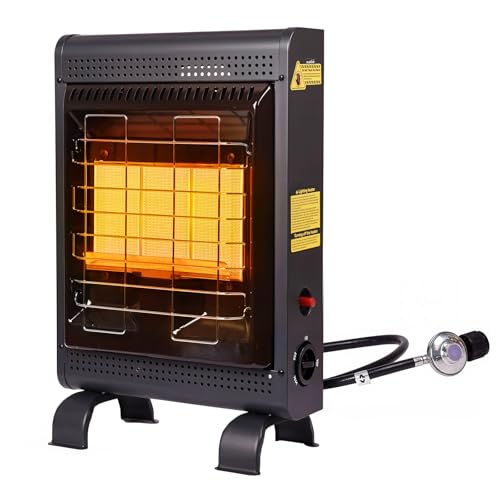
Heat output ranges from 6,000 to 18,000 BTU across three modes, with the capability to warm spaces up to 450 square feet. The unit features a built-in piezoelectric ignition for easy ignition and an emphasis on portable use. A key advantage is its operation without electricity, allowing continued warmth during power outages. The heater’s lightweight design and wide fixed stand prioritize stability and portability, suited for garages, patios, and camping scenarios.
Safety and efficiency features include tip-over protection and an overall compact form factor. Users should note fuel source requirements: a standard 20 lb propane cylinder is needed, and setup should ensure proper venting for indoor use. The unit’s versatility makes it a practical choice for mixed indoor/outdoor applications where electrical access may be limited.
InoKraft Maxheat MH85 85,000 BTU

This large-space heater delivers 85,000 BTU, capable of warming areas up to about 3,200 square feet. It features smart Auto On/OFF at 25–95°F, maintaining your chosen temperature with minimal manual input. The unit is designed for rapid heating (often within minutes) and includes a heavy-duty forced air fan to distribute heat evenly. Safety is reinforced by overheat auto-shutoff and tip-over protection, making it suitable for indoor and well-ventilated outdoor spaces where clean heat is preferred and odors are minimized.
The heater is intended for garages, workshops, job sites, and patios. Its heat direction is adjustable for flexible placement. While powerful, it requires a reliable propane supply and adequate ventilation to ensure safe operation in enclosed spaces.
DEWALT 70,000 BTU Outdoor Portable Propane Heater

Powered at 70,000 BTU per hour, this heater can warm areas up to 1,750 square feet. A notable feature is the option for corded or cordless operation with a compatible 20V MAX battery and charger (sold separately). This flexibility makes it suitable for large indoor spaces without continuous electrical access. The DEWALT unit is designed for rugged job-site environments, aligning with industrial or contractor needs where mobility and ample heat are paramount.
Pros include strong heat output and adaptability to different power sources. Consideration should be given to ventilation and fuel storage, as well as ensuring proper clearance around the unit for safe operation indoors or in semi-enclosed spaces.
Baotree 60,000 BTU Forced Air Propane Heater

This forced-air unit delivers 40,000–60,000 BTU, covering up to around 2,497 square feet. It includes a 10-foot hose with regulator, catering to garages, workshops, job sites, and larger outdoor spaces adjacent to indoor areas. The heater’s heat angle is adjustable from 30 to 45 degrees, enabling targeted warmth and flexible installation. Potential users should follow safety notes about securing gas connections and minimizing noise during operation to avoid disruptive environments.
Rapid heating and broad coverage make Baotree a practical choice for larger, open layouts. Look for proper ventilation and fuel supply planning to maintain safe and efficient operation in indoor contexts.
ProCom ML300TBA-B Ventless Propane Blue Flame Heater

With 28,000 BTU and a heating range up to 1,400 square feet, this ventless blue flame heater is designed for indoor use in offices and living spaces, or other residential settings. It features thermostat control with High/Medium/Low settings, offering adjustable heat output. The unit can be wall-mounted or placed on the floor using included base feet, providing flexible installation options while maintaining a slim, modern profile that blends with interior decor.
Ventless operation requires careful consideration of ventilation and fuel handling, as well as adherence to local codes. Its thermostat-driven approach helps maintain steady comfort without manual adjustments, making it a practical option for controlled indoor warmth.
Buying Guide: Key Purchase Considerations
- Space size and BTU needs: Larger spaces require higher BTU outputs (e.g., 40,000–85,000 BTU) to achieve consistent warmth. For open garages or workshops, choose models designed for 1,500–3,500+ square feet.
- Ventilation and safety: Ventless units save space but demand proper ventilation and gas safety. Always use units in accordance with local codes and manufacturer guidance, especially for indoor use.
- Power source flexibility: Some heaters operate without electricity, while others offer corded or cordless options. Assess whether power outages or limited electrical access affect your space.
- Ignition and controls: Piezoelectric ignition and automatic On/OFF controls simplify operation. Thermostats help maintain stable temperatures with less manual adjustment.
- Portability vs. installation: Portable heaters suit multi-area use, while larger units may require dedicated placement or mounting. Consider stability, clearance, and venting requirements.
- Noise and odor: Forced-air designs can produce noticeable fan noise; ventless infrared models may minimize odor but require adequate ventilation.
- Safety features: Look for tip-over switches, overheat shutoffs, and proper regulator connections. CSA or UL certifications indicate adherence to safety standards.
- Maintenance and fuel: Propane storage, hose/regulator integrity, and routine inspections are essential for long-term safe operation.
These considerations help compare models across coverage, safety, and convenience. Always prioritize units with robust safety features, appropriate BTU ratings for your space, and clear installation guidelines to ensure reliable, compliant indoor heating.