Looking for reliable wireless soil moisture sensors to automate irrigation? This guide highlights five top options that balance range, accuracy, and ease of use for indoor gardens, raised beds, and lawns. Each pick targets a specific need—multi-zone monitoring, long-range connectivity, or Zigbee compatibility—so you can choose what fits your setup and climate best.
Summary of top picks
| Product | Best For | Key Benefit |
|---|---|---|
| Soil Moisture Meter for Plants, 12-Zone Wireless (Vodeson) | Large, multi-zone gardens | Expandable to 12 zones from a single display |
| Nexuslab Wireless Soil Moisture Meter (3-Probe) | Extended-range monitoring | 230 ft range with 3 probes |
| ECOWITT WH51 (Accessory) | Wi-Fi gateway integration | Flexible ecosystem with Ecowitt gateways |
| THIRDREALITY Gen2 (3-Pack) | Zigbee ecosystems | Capacitive sensing, strong stability |
| EDGEVEIL 4-in-1 Wireless Tester | All-in-one monitoring | Moisture, temp, light, clock in one view |
Soil Moisture Meter for Plants, 12-Zone Wireless (Vodeson)

The Vodeson 12-Zone Wireless Plant Water Meter is designed for multi-bed irrigation management. It supports up to 12 wireless sensors connected to a single LCD display, with four sensors included and expandable as needed. Range reaches up to 230 feet, enabling central monitoring from indoors or a cure-all for large gardens. This model emphasizes dry-zone alerts to prevent underwatering or overwatering, minimizing root rot and leaf yellowing.
Best for: Home gardeners with multiple raised beds, vegetable plots, or large containers who want an integrated, screen-based view of soil status. This is also a solid option for gardeners who prefer a dedicated display over frequent app checks.
Caution: The system relies on a dedicated display; ensure you have power access where you plan to place the monitor since readings are centralized on that unit. Expansion requires adding more sensors as needed.
Nexuslab Wireless Soil Moisture Meter (3-Probe)
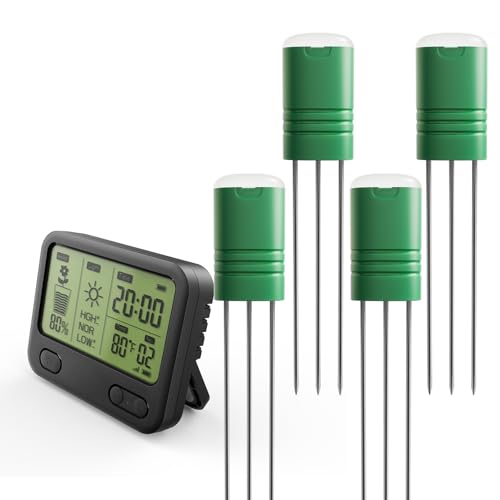
The Nexuslab system offers an expandable 12-zone monitoring solution, starting with two sensors and growing to a full set. It uses Time Domain Reflectometry (TDR) with stainless-steel triple probes to deliver stable readings that are less impacted by soil salinity. The 230-foot open-range RF connection helps keep you in the loop from indoor spaces while tending outdoor beds.
Best for: Gardeners who want reliable, technical-grade moisture readings with a future-proof plan to scale up to full garden coverage. Particularly suitable for larger yards or plots where you want to comb through moisture data without frequent visits.
Limitation: Range may be reduced by walls or dense landscaping; plan placement with line-of-sight to maximize connectivity.
ECOWITT WH51 Soil Moisture Sensor (Accessory)

The ECOWITT WH51 is presented as an accessory in this lineup, designed to pair with GW gateways and displays. It supports up to eight channels when combined with the GW1100 gateway and can upload data to Ecowitt’s weather server for historical graphs. The device is suitable for users who already operate a gateway ecosystem or want remote monitoring via Ecowitt’s app and platform.
Best for: Builders who already own Ecowitt gateways or want a gateway-backed setup that can scale with cloud-based data access and alerts. It’s a flexible choice for those integrating with weather stations or broader environmental monitoring.
Caution: This item is not a stand-alone solution and requires a gateway to function as part of a system; ensure gateway compatibility with existing devices.
THIRDREALITY Gen2 3-Pack (Zigbee)
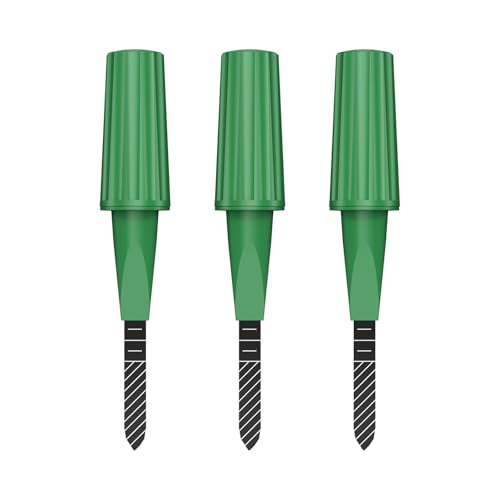
The THIRDREALITY Gen2 line emphasizes Zigbee compatibility with a robust signal. It is optimized for stronger wireless performance and stable data transmission, featuring capacitive sensors that are less affected by soil salinity and pH. This makes it suitable for varied soil types and environments. A Zigbee hub is required for operation.
Best for: Smart home enthusiasts using Zigbee hubs such as Hubitat, SmartThings, or Home Assistant setups who want dependable, long-term integration with other smart devices. Choose this if you already maintain a Zigbee network in your home or garden.
Limitation: Requires a compatible Zigbee hub; out-of-network users may need to add a hub to achieve full functionality.
THIRDREALITY Gen2 (Second Variant)

This Gen2 model mirrors the Zigbee-based approach with capacitive moisture monitoring, designed to deliver consistent readings and adapt to diverse planting scenarios, including farms and greenhouses. It emphasizes a stable monitoring experience within Zigbee ecosystems and is compatible with similar hubs as the other THIRDREALITY option.
Best for: People who want a second Zigbee-enabled sensor option to expand their existing Zigbee network. It’s a solid choice when growing a garden across several zones with smart home integration in mind.
Limitation: Requires a Zigbee hub; performance depends on hub placement and network congestion.
EDGEVEIL Soil Moisture Meter, 4-in-1
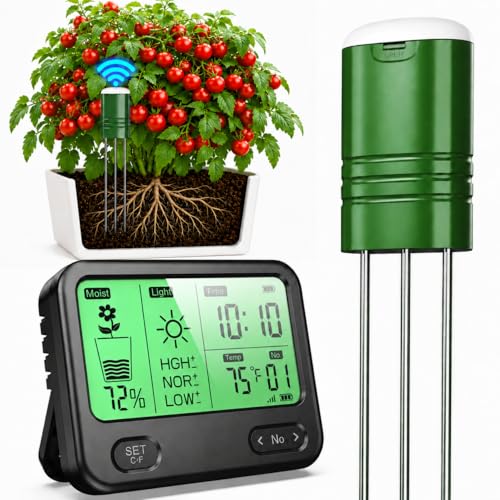
The EDGEVEIL 4-in-1 Wireless Soil Tester provides real-time moisture, temperature, light, and a clock in a single view. It supports up to 328 feet of wireless range, making it suitable for indoor/outdoor use where access from a distance is advantageous. It helps reduce guesswork by showing immediate moisture levels and low-water alerts.
Best for: Gardeners who want a compact, all-in-one solution with a long-range displayless setup or who favor viewing multiple metrics in one screen. It’s also helpful for remote monitoring from a living room or office.
Caution: While wireless range is strong, walls and furniture can attenuate signals; test placement to maximize connectivity.
Buying Guide: Key Considerations for Wireless Soil Moisture Sensors
- Coverage and scalability: How many zones do you need now, and can the system expand later?
- Sensor technology: TDR vs capacitive sensing affects accuracy and soil compatibility. TDR-based sensors tend to be more stable across soil types.
- Connectivity: Do you prefer a central LCD display, a Wi-Fi gateway, or a Zigbee hub–based setup? Consider your existing smart home devices and network layout.
- Range: Open-air range matters for outdoor gardens; walls and furniture can reduce effective distance. Plan sensor placement accordingly.
- Alerts and thresholds: Look for customizable moisture thresholds and alerts to prevent overwatering or underwatering.
- Durability: IP ratings indicate weather resistance; IPX5 is resistant to water jets but not submersion.
- Data access: Some systems offer cloud-based history and graphs; others rely on local displays. Choose based on whether you want remote access or offline monitoring.
- Ease of setup: Expansion ease and whether sensors snap into existing hubs or gateways can influence install time.
- Compatibility: If you use a smart home hub, confirm compatibility with your platform (e.g., Zigbee 3.0, Home Assistant, SmartThings).
FAQ
- What is the best option for a multi-zone garden?
– The Vodeson 12-zone system is designed for expanding to 12 zones from a single display, making it ideal for larger beds and varied plant sections. - Do I need a gateway or hub to use these sensors?
– Some models operate with a dedicated LCD display, while others require Wi-Fi gateways or Zigbee hubs. Check the product page for hub requirements before purchasing. - Is 230 ft range sufficient for outdoor gardens?
– Yes, in open spaces. Range can be reduced by walls, fences, or dense vegetation, so plan sensor placement with line-of-sight where possible. - Are capacitive sensors better than resistance-based sensors?
– Capacitive sensors are generally more durable across soil types and less affected by salinity, offering more consistent readings in varied soils. - Can these sensors help prevent overwatering?
– Yes. Many units let you set moisture thresholds. The display will alert you when zones reach the dry or threshold level, helping optimize irrigation timing. - What should I consider when choosing between a display-based system and one with cloud access?
– If you want on-site monitoring with no internet dependency, a display-based system is sufficient. For remote access and history graphs, a gateway or cloud-connected model is preferable.