If you’re looking to plant seeds quickly and evenly, a two-row seed planter can dramatically improve your gardening efficiency. This guide highlights five reliable options that support up to about 20 seed varieties, helping you choose the best tool for your experience level and garden size. The top picks vary from lightweight handheld models to more durable push-seeders suitable for prepared soil and raised beds. Ideal buyers include small-to-medium home gardeners, seniors seeking ease of use, and raised-bed enthusiasts who want consistent spacing.
| Product | Best For | Key Benefit |
|---|---|---|
| Chapin 8701B | General vegetable gardens | Six seed plates and a 1.5 L hopper for diverse seeds |
| Agri-Fab Push Garden Seeder | Medium plots | Seven plates and adjustable row marker |
| John Deere 3 lb Garden Seeder | Prepared soil gardens | Wide rear wheel for consistent seed-to-soil contact |
| Chapin 8701G | Rust-prone environments | Durable zinc plow blade and rust-resistant hopper |
| CUTANGELAR Multi-Row | Flexible layouts | 1-6 row designs with adjustable spacing |
Chapin 8701B Garden Push Seeder Planter

Best for versatility in seed types. The 6 seed plates let you switch to up to 20 seed varieties, including beans, corn, and leafy greens. A 1.5-liter hopper supports a substantial seed load without frequent refills. The frame is powder-coated steel for durability, and the cushioned handle grips reduce hand fatigue during longer planting sessions. The device marks the row, plows the furrow with a zinc blade, places seeds, and covers as you walk. Best for hobby gardeners who plant many vegetable types in prepared or loose soil.
- Best for gardeners who sow a wide variety of vegetables in temperate climates.
- Better for medium-sized plots with prepared soil.
- Limitations: May feel heavier for very small or compact garden beds.
Agri-Fab Push Garden Seeder

This option emphasizes efficiency and ease of use. It includes seven interchangeable seed plates, allowing compatibility with up to 20 seed varieties. The aluminum frame keeps the unit lightweight, while a 3 lb poly hopper provides dependable performance. It’s well-suited for gardeners seeking to minimize bending and back strain in medium-sized beds. Choose this if you want a lighter, maneuverable tool with solid versatility.
- Best for gardeners managing several seed types in medium plots.
- Better for users prioritizing reduced physical strain during planting.
- Limitation: Aluminum construction trades some ruggedness for lighter weight; in very rocky soil, care is needed.
John Deere 3 lb Garden Seeder
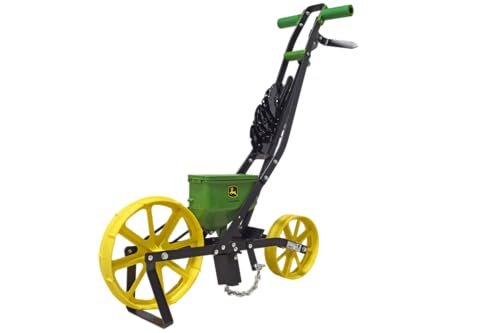
Best for prepared soil gardens requiring consistent seed-to-soil contact. The unit includes seven seed plates supporting up to 20 seed types and sizes. The wide rear wheel aids steady seed placement and uniform rows, useful for gardeners who already cultivate well-prepared beds. It’s a solid option for those who value dependable performance in steady, line-by-line sowing.
- Best for established garden plots with prepared soil.
- Better for gardeners prioritizing consistent seed placement over rugged terrain.
- Limitation: Performance may depend on soil uniformity; uneven beds can affect results.
Chapin 8701G Garden Push Seeder

Best for gardeners facing rust or moisture exposure. This model uses a rust-resistant 1.5-liter poly hopper and a durable zinc plow blade. It supports up to 20 seed varieties with six interchangeable plates, offering flexibility across crops. It’s a robust choice for outdoor beds where weather and moisture are ongoing considerations.
- Best for rust-prone or humid environments.
- Better for long-term outdoor use with durable components.
- Limitation: Heavier compared to some aluminum-framed models.
CUTANGELAR Multi-Row Garden Seeder (3-row)

Best for flexible garden layouts. This multi-row planter is available in 1-6 row configurations, with precision sowing features to ensure even spacing and depth. It offers adjustable row spacing and seed depth, making it suitable for raised beds, terraces, and hillsides. It supports a wide range of seeds from small herbs to larger vegetables and can adapt to different garden designs.
- Best for customizable row numbers and spacing.
- Better for diverse garden layouts and raised beds.
- Limitation: Higher upfront complexity for users new to planters.
Buying Guide
- Seed compatibility: Look for models with multiple seed plates and a high count of compatible seed types to maximize versatility.
- Hopper capacity: A larger hopper reduces refills in bigger beds but may add weight; balance capacity with garden size.
- Frame material: Steel frames offer durability; aluminum is lighter but may be less rugged in rocky soil.
- Ease of use: Features like row markers, plows, and easy-disengage mechanisms reduce effort and improve accuracy.
- Adjustability: Depth and row spacing controls help tailor planting to seed size and bed type (raised beds vs. in-ground).
- Maintenance: Rust resistance and washable components extend tool life in damp climates.
Frequently Asked Questions
- What’s the main advantage of a two-row seed planter?
It enables consistent spacing across two parallel rows, increasing planting speed and uniformity in larger beds. - Which planter is best for beginners?
A lightweight model with multiple seed plates and simple push-action is ideal for new gardeners. - Can these seeders handle small and large seeds alike?
Yes, when they offer a variety of seed plates, but check recommended seed types for each plate. - Are metal frames better than plastic?
Metal frames tend to be more durable in rough gardens; plastic hoppers save weight but may wear faster with rough seeds. - How important is row spacing?
Row spacing determines plant access, air circulation, and growth; choose adjustable models for fine-tuning.