Looking for solid homeschool programs for middle school students? This guide highlights five curated options that align with core middle school needs, from science and language to practical life skills and planning. Each product is chosen for clarity, structure, and usefulness in a home-education setting. The sections explain who benefits most, why a given product stands out, and any limitations to consider—so you can select confidently for your student’s goals and your teaching style.
Quick glance: chosen products and why they fit middle school homeschoolers
| Product | Why It Fits Middle School |
|---|---|
| Carson Dellosa The 100 Series: Biology Workbook | Strong biology vocabulary and standards-aligned activities for grades 6-12; ideal for structured science progress. |
| Spectrum Grade 7 Science Workbook | Broad science coverage (natural, earth, life) with activity-based learning; supports state standards-based instruction. |
| Skillmatics Flashcards: Real World Concepts | Practical life skills that reinforce financial literacy and everyday topics often missing from standard curricula. |
| Carson Dellosa The 100 Series Spanish Workbook | Builds vocabulary and functional sentence-building skills for middle school bilingual learners or language learners. |
| Middle School Homeschool Planner | Structured planning tool to set goals, track assignments, and maintain an organized homeschool routine. |
Carson Dellosa The 100 Series Biology Workbook
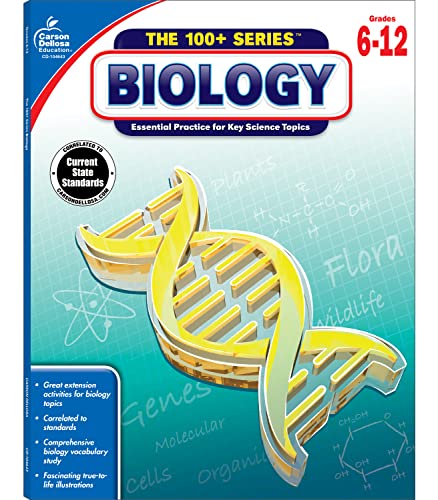
This biology workbook is best for middle school students who need structured practice with key concepts like matter, cells, genetics, and bonds. The workbook aligns with core standards and provides comprehensive biology vocabulary study, plus extension activities that reinforce understanding. It is a strong choice for learners who benefit from a clear, workbook-based approach to science in a homeschool setting. Caution: the content spans grades 6-12, so older students may complete it more quickly than younger learners.
Spectrum Grade 7 Science Workbook

Best for students needing a broad, standards-based science review across natural, earth, and life sciences. This Spectrum workbook supports learners who benefit from diverse activities and fact-based science literacy development. It helps introduce and reinforce key science concepts and offers a solid framework for ongoing homeschool science curricula. Limitation: as a workbook series, it may work best when paired with hands-on experiments or additional discussion to deepen comprehension.
Skillmatics Flashcards: Real World Concepts

Best for teaching practical life skills that aren’t always covered in traditional curricula, such as taxes, money management, and daily decision-making. The 70 double-sided cards present complex topics in clear, kid-friendly language with visuals that aid retention. Choose this if you want real-world readiness alongside academic content. Caution: flashcards are best used as supplementary material rather than a complete program.
Carson Dellosa The 100 Series Spanish Workbook

Best for middle school learners building vocabulary, sentence-building skills, and cultural context in Spanish. This workbook offers over 100 reproducible activities to support steady language growth in a homeschool setting. It is particularly suitable for students seeking structured language practice aligned with middle school expectations. Limitation: as a workbook, it may require supplementary speaking or listening exercises to develop fluency.
Middle School Homeschool Planner

This planner focuses on goal-setting and objective tracking, helping homeschool families maintain an organized learning schedule. It is best for students who benefit from structured planning and accountability, as well as for teachers or parents who want to monitor progress across subjects. Caution: planners vary in layout; ensure the format fits your preferred weekly or monthly planning style.
Buying Guide: Key Considerations For Middle School Homeschool Programs
- Curriculum scope: Decide whether you need broad science coverage, language development, or practical life skills, and match products to those needs.
- Student pace: Consider if your student benefits from self-directed workbooks or guided lessons with teacher support.
- Standards alignment: Look for materials that reference state or national standards to ease planning and assessment.
- Supplementary activities: Pair workbook-based resources with hands-on experiments, field trips, or discussion prompts for deeper understanding.
- Language goals: For multilingual learners, combine Spanish workbooks with speaking and listening practice to build full proficiency.
- Organization: A dedicated planner can improve consistency; pairing it with a simple grade-tracking system helps monitor progress.
- Accessibility: Ensure readability and layout suit your student’s learning style, including font size, color contrast, and exercise variety.
- Cost and materials: Consider whether a resource is a stand-alone purchase or part of a broader set that requires additional purchases.
Frequently Asked Questions
- What type of homeschool program is best for middle school science?
Look for a balance of concepts, vocabulary practice, and hands-on activities. A workbook with standards alignment, like the biology or general science options listed, plus real-world experiments, often works well.
- How can I integrate practical life skills into middle school learning?
Use resources such as real-world concept flashcards to teach taxes, budgeting, and daily decision-making, and pair them with discussion prompts and activities.
- Should I use a planner for homeschooling?
Yes. A planner helps establish goals, track assignments, and maintain a consistent schedule, especially for parent-led or mixed-paced curricula.
- Are language workbooks suitable for all middle school learners?
They are beneficial for structured practice and vocabulary building, but combine with speaking, listening, and reading activities for comprehensive language development.
- What if a workbook covers grades beyond my child’s level?
Use the material selectively for targeted topics, and supplement with simpler explanations or guided practice to match your student’s pace.
- Can these resources replace a full curriculum?
They can form core components but often work best when integrated with additional activities, projects, and assessments tailored to your student.