If you need reliable emergency exit panic bars for high-traffic doors, this guide identifies top options that blend safety, durability, and easy operation. The best picks are suited for warehouses, offices, hotels, retail spaces, and other facilities requiring quick, secure egress. Each product is evaluated for build quality, compatibility, and practical use in busy environments. This article highlights five strong choices and explains who benefits most from each design.
| Product | Why It Stands Out |
|---|---|
| FORTSTRONG Panic Bars | Heavy-duty, UL-listed, adjustable for 31″-47″ doors, versatile with keypad lock systems. |
| Dynasty Hardware Push Bar (Exterior Lever) | Grade 1 certified, reversible, dogging feature, suitable for high-traffic settings. |
| VEVOR 31″ Stainless Steel Panic Bar | Sturdy stainless steel, dogging option, 31″ length suitable for 30″-36″ doors. |
| VEVOR 28″ Stainless Steel Bar | Compact option with external lever, strong for 28″-41″ doors. |
| IRONWALLS 32″ Surface Vertical Rod | Single top latching, stainless steel, designed for smooth operation on tall doors. |
FORTSTRONG Panic Bars for Exit Doors

Best for high-traffic commercial settings that require a robust push bar with wide compatibility. This model uses heavy-duty construction and UL-listed components, designed to withstand over 500,000 cycles. It integrates with keypad lock systems and adapts to door widths from 31″ to 47″. A dogging feature lets doors stay unlocked for deliveries or maintenance. Ideal for facilities needing reliable performance and ADA-compliant access control, such as large offices or retail hubs.
Who it’s best for: facilities needing a durable, versatile bar with keypad compatibility and heavy-use reliability. Caution: ensure door width range matches your installation for seamless operation.
Dynasty Hardware Push Bar Panic Exit Device With Exterior Lever
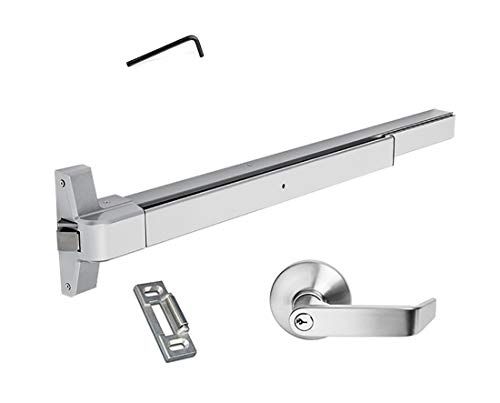
Best for facilities needing a robust, reversible unit with exterior lever and dogging capability. This Grade 1 certified device supports high-traffic doors and can be installed on both right- and left-handed openings. Included dogging feature enables constant-open operation during deliveries or large evacuations. Suitable for commercial buildings like offices, schools, and hospitals. Limitation: exterior lever and keyed lock add complexity during installation and maintenance.
Dynasty Hardware Push Bar Panic Exit Device, Aluminum Finish

Best for mid-size commercial entrances with 30″-36″ doors where a modular, easy-installation panic bar is needed. This unit is reversible and rated for commercial use, with a durable aluminum finish. Includes dogging key and strike plate; exterior lever trim is sold separately. Choose this if you want a straightforward installation and a strong aluminum finish for moderate traffic.
VEVOR Door Push Bar Panic Exit Device, 31” Stainless Steel

Best for new installs in commercial buildings needing a corrosion-resistant stainless steel push bar. Includes exterior lever and three keys with a dogging option that supports large-scale evacuations. It fits 30″-36″ wide wooden or metal doors and is not designed for glass doors. Use this when you want a solid stainless option with key access and secure interior operation.
VEVOR Door Push Bar Panic Exit Device, 28” Stainless Steel
Best for smaller or narrower door openings that still require commercial-grade panic hardware. This 28″ bar is sturdy, uses a carbon steel core with a rust-resistant coating, and supports both left- and right-handed doors. External lever and key options add security for controlled access. Choose this when door width is constrained but high durability is still needed.
IRONWALLS Surface Vertical Rod Exit Device
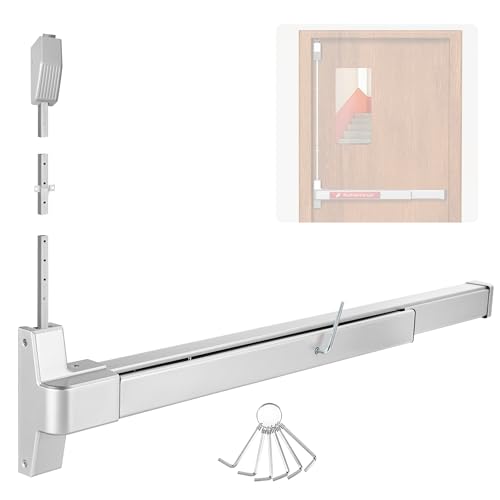
Best for tall doorway installations requiring a single top-latching mechanism and a stainless-steel finish. Height-adjustable vertical rod supports 32″-48″ doors and standard left-handed configurations, with recommended reversal if right-handed. Features a streamlined top latch design to reduce maintenance and improve accessibility. Not designed for glass doors, so choose for wood or metal openings.
Buying Guide
What to consider when choosing an emergency exit panic bar:
- Door width and handedness: Confirm the door width and whether the door is left- or right-handed to select a model that installs without modification.
- Material and finish: Stainless steel offers corrosion resistance; aluminum is lighter but still durable. Choose a finish that matches your door hardware and environment.
- Security features: Decide if you need dogging for constant-open mode, exterior levers, or keyed access for controlled entry from the outside.
- Compliance and testing: Look for Grade 1 or UL-listed devices for high-traffic buildings to ensure reliability and safety compliance.
- Installation considerations: Some models are easier to install or require fewer drilling operations; consider maintenance needs and technician availability.
- Durability in environment: For outdoor or humid environments, select rust-resistant materials and designs with protective coatings.
Frequently Asked Questions
- What is a panic exit device and when should I install one?
A panic exit device is a hardware bar that allows easy exit in an emergency by pushing a bar, often used on exit doors in busy facilities.
- What does Grade 1 certification mean?
Grade 1 indicates the unit is built for heavy-duty, high-traffic use and meets strict industry standards for performance and durability.
- Can panic bars be used on any door?
They are designed for specific door types and widths. Confirm compatibility with door material (wood, metal, or glass) and width before purchasing.
- What is dogging on panic bars?
Dogging is a feature that keeps the latch retracted, allowing the door to stay open without holding the bar. Useful during deliveries or evacuations.
- Are exterior levers necessary?
Exterior levers provide access control from the outside and are common in public buildings, but may not be required for all applications.
- What maintenance is typical for panic bars?
Regular inspection of latches, dogging mechanisms, and mounting hardware helps ensure consistent performance in emergencies.