When tackling thick weeds and brush, a robust gas-powered weed wacker with a brush cutter attachment often delivers the best results. This guide highlights five reliable options for American buyers, focusing on power, durability, and ease of use. Each pick is suited to different yard sizes and task demands, from commercial-style clearing to home gardens with overgrowth. Use the quick-reference table below to compare core specs at a glance.
| Product | Engine | Cutting Path | Best For |
|---|---|---|---|
| Earthquake Walk Behind String Mower | 160cc Viper 4-Cycle | 22 inches | Heavy brush, open lots |
| Powerhorse High-Wheeled Walk-Behind | 173cc | 22 inches | Flat terrain with obstacles |
| PROYAMA 42.7cc 3-in-1 | 42.7 cc 2-cycle | Not specified (brush capable) | Home gardens and light brush |
| NEO-TEC 26cc 3-in-1 | 26cc 2-cycle | 16 inches | Light to moderate weed and edging |
| ATIE 10″ 3-Tooth Blade | Blade accessory for multiple models | 10 inches (blade) | Heavy brush cutting with blades |
Earthquake Walk Behind String Mower With 160cc Viper Engine
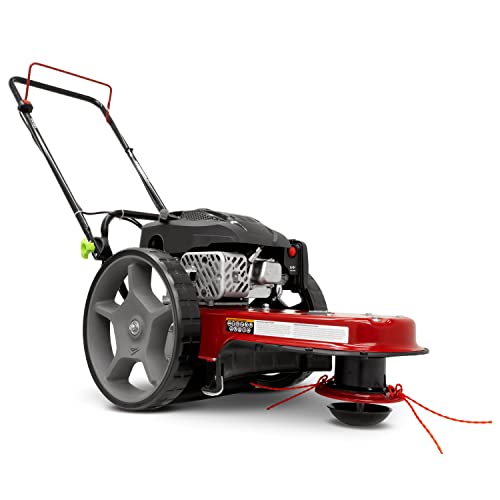
The Earthquake 40314 pairs a 160cc Viper 4-cycle engine with a 22-inch cutting width, designed for reliable power and durable operation on tougher terrains. It features a grab-and-go engagement bail to pause and restart cutting without restarting the engine, and extra-wide airless wheels that enhance balance across uneven ground. The adjustable handlebar helps tailor fit to the operator, reducing fatigue during long sessions.
Best for: Property owners clearing large patches of dense weeds or light brush on flat or rolling terrain. This model excels when you need continuous cutting without frequent restarts.
Caution: Heavier than handheld trimmers; maneuverability may require more space in tight areas. Ensure stable footing when engaging the head for safety.
Powerhorse High-Wheeled Walk-Behind String Trimmer

The Powerhorse 173cc model uses a vertical gas engine to deliver up to 3000 RPM with a 22-inch cutting swath. Its rear wheels contribute to easy maneuverability for walk-behind control, making it a solid choice for larger yards where plowing through weeds requires steady momentum.
Best for: Users who need robust power with stable handling on open lawns and areas with minor obstacles. Choose this if you value a strong engine and straightforward operation.
Caution: The 173cc engine may produce more noise and vibration; plan for hearing protection and comfort when working long sessions.
PROYAMA 42.7cc Gas Weed Wacker, 3-in-1

This all-in-one tool combines trimming, edging, and brush cutting in a single unit. Powered by a 2 HP 42.7 cc 2-cycle engine, it offers more power for larger overgrowth and easier starting. Its ergonomic handle and quick-release shaft ease transportation and storage.
Best for: Home gardens and small farms where you need a single tool to perform multiple tasks without swapping attachments frequently.
Caution: As a 2-cycle engine, it requires proper fuel mix and maintenance to sustain performance over time.
NEO-TEC 26cc 3-in-1 Gas String Trimmer

The NEO-TEC tool combines a lightweight 26cc engine with a 3-in-1 design for edging, trimming, and light brush cutting. It emphasizes comfort through an ergonomic handle and adjustable shoulder strap, with a balanced build and split shaft for easier transport and storage.
Best for: Small to medium residential yards needing frequent edging and trimming in addition to weed control, without excessive weight or bulk.
Caution: The 26cc engine may struggle with heavy brush or thick stands; best used for lighter overgrowth and regular maintenance.
ATIE 10″ 3-Tooth Blade Brush Cutter

These 10-inch, 3-tooth steel blades are designed as brush cutter attachments for cutting through thick brush and woody growth. They fit 1″ or 20 mm arbors and work well when paired with compatible trimmers for heavy-duty clearance.
Best for: Contractors or homeowners dealing with dense brush and small trees where a blade is advantageous for rapid thinning and clearing.
Caution: Blade attachments require proper mounting and safety practices to prevent kickback or injury.
Buying Guide: Key Considerations For Brush-Clearing Power Tools
- Engine size and power: Larger engines typically handle thicker brush but come with more weight and noise. Match power to your yard size and typical growth levels.
- Attachment options: 3-in-1 designs add versatility (trimmer, edger, brush cutter), while blade attachments offer aggressive cutting for woody growth. Ensure compatibility with existing equipment.
- Cutting path and blade type: Wider cutting paths speed up clearing on open areas; blades are best for dense brush but require caution and proper PPE.
- Weight and maneuverability: Heavier units provide more torque but may be harder to maneuver in tight spaces. Look for adjustable handles and balanced designs.
- Fuel and maintenance: Gas engines require regular fueling and maintenance. Consider ease of starting, fuel efficiency, and availability of replacement parts.
- Safety features: Bail arms, handlebars, vibration reduction, and blade guards increase operator safety during use.
FAQ
- What is the best tool for heavy brush?
Heavy brush often responds best to a high-torque gas engine paired with a blade attachment like a 3-tooth or steel brush blade. - Are 2-cycle engines suitable for yard work?
Yes, many 2-cycle tools offer adequate power for trimming and light brush, but they require proper fuel mix and more maintenance. - Should I choose a walk-behind model or a handheld trimmer?
Walk-behind models are better for large areas and stubborn growth; handhelds are more maneuverable in tight spots. - Can attachments fit multiple brands?
Some blades and attachments are universal (1″ or 20 mm arbor), but always verify compatibility with your trimmer model. - Is a blade attachment safer than a string cutter?
Blades are effective for woody brush but require strict safety practices; strings are safer for light vegetation but less effective on thick brush. - What maintenance is required for gas weed wackers?
Regularly check air filters, spark plugs, fuel mixture, and carburetor performance; follow the manufacturer’s maintenance schedule.