Answering buyers’ needs: this guide highlights the best gas fuel line kits and individual hoses for small engines, dirt bikes, scooters, and light trucks. These selections suit DIY tinkerers, hobbyists restoring small engines, and vehicle owners looking for replacement lines. Each entry includes best-use ideas, why it was chosen, and a practical limitation to consider before purchase. The products below use standard I.D./O.D. measurements and are common options for 2-stroke chainsaws, go-karts, ATVs, and pickup trucks.
Product Comparison Table
- AUTOKAY Small Engine Fuel Line Kit — 4 sizes for small engines
- Dexepe Nylon Fuel Lines Kit — for Chevy Silverado and GMC Sierra (FL-FG0053/NFR0003)
- 1PZ DD1-X02 Gas Lines Kit — long multi-purpose lines for scooters and pocket bikes
- GREHUA Gas Fuel Filter Hose Tube — dirt bike and scooter compatibility
- HIAORS Dirt Bike Gas Fuel Line — with fuel filter and clips
AUTOKAY Small Engine Fuel Line Kit

Best for: DIY enthusiasts restoring small engines like lawn mowers, chainsaws, trimmers, and weed eaters. The kit includes four sizes (I.D./O.D. 0.08″ x 0.14″, 3/32″ x 3/16″, 1/8″ x 3/16″, 1/8″ x 1/4″) to cover common fuel line needs and avoid mid-project delays.
Why chosen: The four-tube assortment fits a wide range of small engines, and the lengths (about 4.9 feet per tube) provide flexibility for routing around frames and components. The material claims oil, gas, and corrosion resistance, supporting durability in typical outdoor tools.
Best for whom: Homeowners or hobbyists who service multiple small engines and want a single kit rather than several single-sized hoses.
Caution: Verify your exact I.D./O.D. measurements before ordering to ensure a proper fit; some engines may require different tolerances.
Dexepe Fuel Lines Kit For Chevrolet Trucks

Best for: Automotive owners needing replacement fuel lines on older Chevy Silverado and GMC Sierra models from 1999–2003 with 4.8L/5.3L/6L/8.1L engines. The kit references compatibility with FL-FG0053 FG0053 NFR0003 parts numbers.
Why chosen: It targets a specific, common truck generation and offers a dedicated repair option that aligns with factory routing. The kit emphasizes improving fuel flow efficiency, which can impact engine performance and economy in older vehicles.
Best for whom: Owners performing restoration or maintenance on late-1990s to early-2000s Chevy/GMC pickups who want a focused fit.
Caution: Confirm exact OE reference and clip layout for your vehicle; compatibility is model-year specific beyond engine size.
1PZ DD1-X02 Gas Lines Kit

Best for: Scooter owners and mini-bike enthusiasts seeking long, multi-application fuel lines for X1, X2, X7, X8 Cat Eye, Zooma, TY, ROD, G-Scooter models and similar platforms.
Why chosen: The kit provides 22″ long fuel lines and notes a 25mm grommet size with 14mm thickness, offering decent flexibility for scooter frames and easy installation on common 2-stroke configurations.
Best for whom: Riders who service a range of compact scooters or pocket bikes and need replacement hoses that fit multiple models.
Caution: Availability and fit may vary with non-listed Go-Kart or scooter variations; measure grommet and line diameter before purchasing.
MUCO Nylon Fuel Line Kit for Chevy Blazer/Jimmi
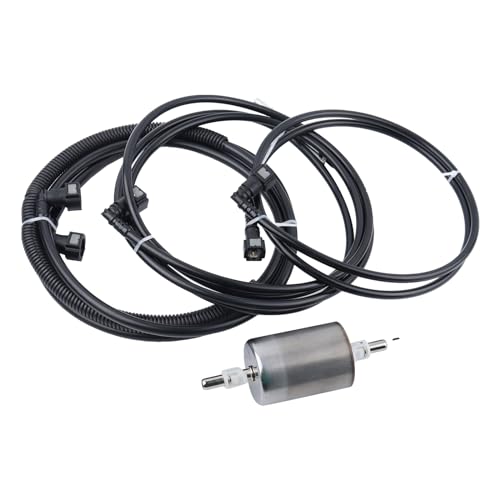
Best for: 1997–2005 Chevy Blazer and GMC Jimmy with inline fuel lines needing a snug fit in factory clips. The kit emphasizes a tight fit and ease of bending with clamps for secure routing.
Why chosen: The kit is positioned as a direct replacement that aligns with factory clip locations, reducing routing guesswork and install time for mid-2000s SUVs.
Best for whom: DIYers maintaining older GM SUVs who want a flexible, closely matched fuel-line replacement that’s easy to install without reconfiguring lines.
Caution: Verify exact OE reference numbers (NFR0005/NFR0010) to ensure match with your vehicle’s fuel-line routing.
HOOUP Dirt Bike Gas Fuel Line Kit

Best for: Dirt bikes and pocket bikes requiring a complete fuel line kit with a filter and multiple retention clips for 50cc to 250cc engines.
Why chosen: The kit includes a fuel line of 1000mm length, a fuel filter, and eight spring clips, which provide a ready-to-install package for dirt bike owners looking for a comprehensive replacement solution.
Best for whom: Riders who want an all-in-one kit that reduces additional shopping for filters and clips and ensures compatibility with common 50cc–250cc Chinese-made bikes.
Caution: The included filter may require periodic replacement; check local regulations on fuel filtration for your model and environment.
GREHUA Gas Fuel Filter Hose Tube
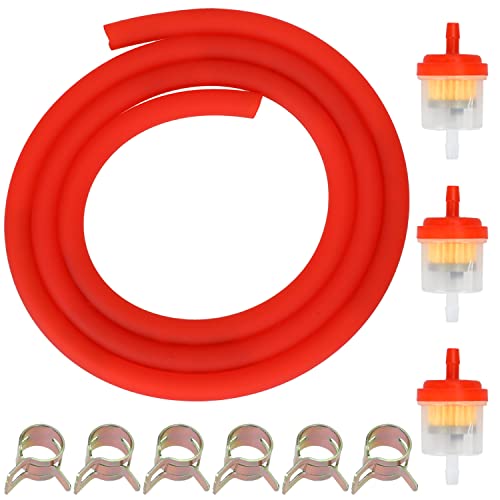
Best for: Dirt bikes and scooters that require a robust gas line compatible with GY6-based engines and related 50–150cc classes.
Why chosen: The kit supports a wide range of GY6 and SSR variants, with tubing designed to resist pressure and a shell that can handle simple filtration needs. It also includes extra hose clips for secure mounting.
Best for whom: Riders of compact scooters and dirt bikes who want a durable, reasonably universal option with straightforward installation.
Caution: Heightened compatibility claims cover many models; verify that the inner/outer diameters match your fuel system before purchase.
HIAORS Dirt Bike Gas Fuel Line Kit

Best for: Dirt bikes and ATVs needing a flexible fuel line with a compatible fuel filter for 50cc–125cc engines and similar Go Kart frames.
Why chosen: The kit covers a broad engine range and emphasizes compatibility with CRF50 XR50, Coolster, Taotao, SSR, and other common dirt-bike platforms, offering a practical replacement option for enthusiasts.
Best for whom: Riders who maintain multiple dirt-bike models and want a single kit that can fit various frames with minimal adaptation.
Caution: The description lists many compatible models; confirm that your specific model’s fuel line diameter and clip layout match the kit’s specs.
Buying Guide
What should I look for in a fuel line kit?
Key factors include inner diameter (I.D.), outer diameter (O.D.), material resistance to fuel/ethanol blends, flexibility for routing, length, and compatibility with your engine type. Small engines typically use smaller I.D.s, while scooters and dirt bikes may require longer or thicker hoses.
How do I choose the right size?
Measure the current hose I.D. and O.D. at the connection points. Compare to listed kit sizes (for example, 0.08″ x 0.14″ or 1/8″ x 1/4″). If in doubt, bring a sample or screenshot to an auto parts store for guidance.
Is a multi-size kit better than single-size hoses?
Yes for versatility. A four-size kit can cover multiple tools in a workshop, reducing the need to stock several loose hoses. For a single project, a precise one-size kit may save time and prevent overfitting.
What about installation considerations?
Check for clips, clamps, and filters if included. Ensure the hose length allows safe routing away from hot surfaces and moving parts. Replace worn clamps to prevent leaks and verify that the fuel line is not stretched or kinked.
Are these kits compatible with ethanol blends?
Many hoses claim oil, gas, and corrosion resistance, which helps with ethanol-containing fuels. Always verify the product’s spec sheet for ethanol compatibility and the environment where your engine runs.
What are common limitations to expect?
Compatibility with specific vehicle models and engine generations can limit some kits. Some products target particular brands or series, so confirm fitment and clip layout before purchasing. Availability and model-specific notes may affect applicability.
FAQ
- Q: Do these hoses fit 2-stroke engines? A: Yes, several options target 2-stroke small engines commonly used in lawn tools.
- Q: Can I cut hoses to fit my bike? A: Many hoses can be cut to length; measure requirements and cut carefully to avoid frayed ends.
- Q: Will these replace OEM parts exactly? A: Some kits are designed as direct replacements, while others provide flexible options that may require minor routing adjustments.
- Q: Should I replace filters when installing a new hose kit? A: If the kit includes a filter, replace it if it is part of routine maintenance; otherwise follow your engine’s maintenance schedule.
- Q: How do I avoid leaks after installation? A: Use proper clamps, ensure clean connection points, and verify hose seating before starting the engine.
- Q: Are prices listed in the product pages? A: This guide omits price details to focus on fit and suitability for intent-driven purchases.