Answering the need for quick, reliable gas leak detection, these devices help pinpoint leaks from methane, propane, butane, and other fuels. Best for homeowners, RV users, and DIYers, they offer rapid alarms and portable designs. The top picks below explain who each tool is best for, based on sensitivity, portability, and ease of use. Use this guide to compare models side by side and choose the right detector for your space.
| Product | Brand | Key Benefit |
|---|---|---|
| PT520A Natural Gas Detector | TOPTES | Long 17-inch gooseneck for tight spaces; fast 0.5s response; good for large or hard-to-reach areas |
| PT199 Natural Gas Leak Detector | TOPTES | Portable handheld with quick visual and audible alarms; ideal for quick spot checks |
| PT177 Gas Leak Detector | TOPTES | Pocket-sized with warm-up guidance; handy for RVs and small spaces |
| Klein Tools ET190 Gas Leak Detector | KLEIN TOOLS | Wide detection range; compact with pocket clip; robust for varied environments |
| PT205 Natural Gas Detector | TOPTES | Shows %LEL levels; strong visual/audible alerts for explosion risk awareness |
PT520A Natural Gas Detector

The TOPTES PT520A detects methane, propane, natural gas, LPG, and butane in tight spaces. A 17-inch gooseneck helps reach confined areas such as pipelines or basements. It responds in 0.5 seconds with 7 colored bars and a 75dB alarm. Detection range spans 50-10,000 ppm (Methane). Best for homeowners with long reach needs or contractors working in cramped rooms; the extended probe minimizes the need for dismantling objects. Caution: probe placement should be within 1–5 cm of suspected leaks for best readings.
PT199 Natural Gas Leak Detector
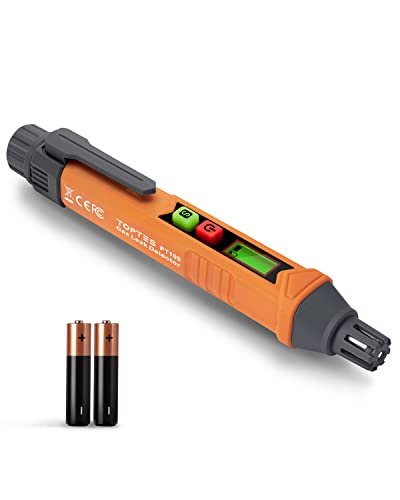
The PT199 is a compact, portable gas sniffer that detects natural gas, methane, propane, butane, LPG, and more. It provides visual and audible alarms within 0.5 seconds, and an LCD that highlights high readings in red. It includes two AAA batteries and a 30-second warm-up. Best for quick on-the-spot checks around appliances or RV compartments; avoid extended use without monitoring for low-battery conditions.
PT177 Gas Leak Detector

The PT177 is a pocket-sized detector that pinpoints leaks of methane, propane, butane, and other gases. It requires a 30-second warm-up in a clean environment to ensure accuracy, and it offers five red LEDs with a 75 dB alarm that intensifies with gas concentration. Best for RV enthusiasts or homeowners with limited space; use the included storage bag for portability. Limitation: needs a clean start area for accurate results.
Klein Tools ET190 Gas Leak Detector
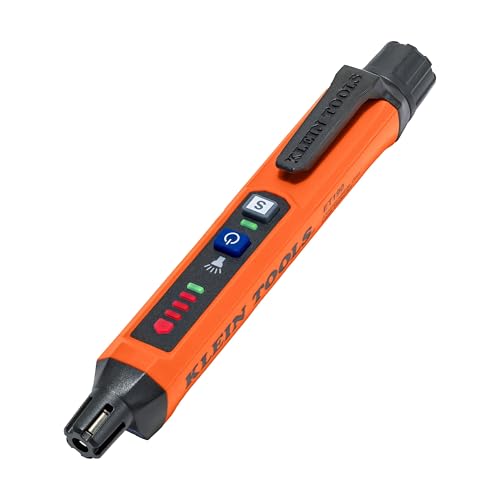
The ET190 has a wide detection range from 100 to 2,000 ppm, making it suitable for residential, commercial, and industrial settings. It is compact and pocket-ready with a durable pen clip, and provides both visual LED indicators and escalating audible alerts. Best for professionals and DIYers who need a reliable, portable detector that can handle varied environments; limitation: higher-end sensitivity may be overkill for very small spaces.
PT205 Natural Gas Detector

The PT205 is an upgraded TOPTES model that detects LPG, methane, ethane, propane, butane, natural gas, and coal gas. It features a 30-second warm-up, rapid 0.5-second detection, and visual and audible alarms. A key benefit is its %LEL display (1%LEL to 10%LEL, 100ppm-5,000ppm). Best for households seeking explosion-risk awareness and detailed measurement; caution: %LEL readings require proper calibration and interpretation in varying ambient conditions.
Buying Guide: Gas Leak Detectors — Key Considerations
- Detection range and sensitivity: Choose devices with ppm ranges that suit your space, such as 50-10,000 ppm for general use or %LEL readouts for explosion risk awareness.
- Probe length and reach: Long goosenecks help in tight spots; consider telescoping or pocket-sized models based on space and portability needs.
- Alarm type and response: Look for rapid visual and audible alarms (0.5 seconds or faster) to ensure quick recognition in noisy environments.
- Warm-up time and calibration: Some models require 20–60 seconds warm-up; others auto-calibrate or offer manual calibration guidance. Plan usage around warm-up.
- Power source and runtime: Battery-included units add convenience, while rechargeable models reduce ongoing costs. Check for low-battery indicators and automatic shutoff features.
- Portability vs. professional-grade: Pocket detectors suit RVs and quick checks; broader industrial models offer wider detection ranges and rugged construction.
- Applications and gas types: Ensure the detector covers methane, propane, butane, LPG, and other gases relevant to your dwelling or vehicle.
Frequently Asked Questions
- What gas detectors are best for homes? Portable detectors with broad gas coverage (methane, propane, butane) and clear alarms are typically best for most homes. Look for ease of use and quick warm-up.
- Do gas detectors detect all gases at the same time? Most detectors target common combustible gases like methane, propane, and butane. Some models provide a %LEL readout for more detailed concentration information.
- How should I place a gas detector? Position near potential sources (gas ranges, furnaces, basements) and follow the device’s guidance for optimal readings. Use long probes for tight spaces when available.
- What is the difference between portable and fixed detectors? Portable detectors are handheld for quick checks and travel use; fixed detectors are installed in a space for continuous monitoring. Choose based on your risk profile and space layout.
- How often should I replace batteries in these detectors? Check battery indicators and replace promptly when low to maintain reliability, especially in kitchens and garages.
- Can these devices detect refrigerant leaks? Some detectors can sense refrigerant gases when designed for that purpose, but most listed models focus on flammable hydrocarbon gases. For refrigerants, look for a dedicated refrigerant leak detector.