When selecting heated snow-melting mats, choose solutions that fit your walkway size, installation needs, and climate. This guide highlights five top options that balance durability, ease of use, and energy efficiency for American homeowners and property managers. Best for: compact entrances, larger walkways, and multi-mat setups. The following picks are optimized for simple installation, reliable performance, and clear value in icy conditions.
Summary Table
| Product | Best For | Key Benefit | Notable Limitation |
|---|---|---|---|
| HeatTrak Heated Snow Melting Mats for Entrances (30” x 48”) | single wide entryways | durable, easy install, energy efficient | smaller surface area than larger mats |
| HeatTrak Heated Snow Melting Mat with Power Unit (20” x 60”) | linear walkways | includes power unit; plug-and-go start | requires outlet access |
| HeatTrak Heated Snow Melting Mats for Entrances (40″ x 60″) | larger entrances | durable, energy efficient | bulkier footprint |
| 4 Pcs Heated Snow Melting Mats (10 x 30″) by funomo | modular layouts | multi-mat kit with cables and accessories | more setup planning needed |
| anqaros Snow Melting Mat, 30 x 48in | custom layouts | graphene heating for quick, even heat | requires thoughtful power management for multiple mats |
HeatTrak Heated Snow Melting Mats for Entrances (30” x 48”)

Features: Durable design made to withstand harsh winter conditions; easy to install with minimal maintenance; energy efficient, melting snow at about 2 inches per hour. Best for single-entry applications where a robust, year-round mat is desired.
Who it’s best for: homeowners with a standard-width entry mat and a need for a turnkey solution that requires limited setup. Why selected: proven durability and straightforward installation align with common front-door use cases. Limitation: large openings may require an additional unit for full coverage in wider entryways.
HeatTrak Heated Snow Melting Mat with Power Unit (20” x 60”)

Features: Includes Power Unit for immediate start, easy to install and maintain, energy efficient; surface temperature can rise to about 40 degrees Fahrenheit above ambient and performs well down to -8°F. Best for linear walkways or decks where quick setup and mid-range coverage are needed.
Who it’s best for: users seeking a plug-and-play system that minimizes wiring complexity. Why selected: the built-in Power Unit makes initial setup faster than daisy-chaining multiple mats. Caution: ensure a nearby outlet and weatherproofing are in place for outdoor use.
HeatTrak Heated Snow Melting Mats for Entrances (40″ x 60″)
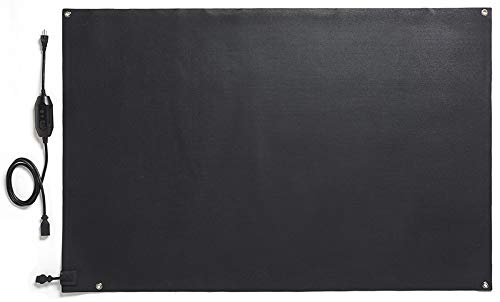
Features: Durable, corrosion-resistant construction built for heavy winter use; easy to install and maintain; energy efficient with similar snow-melt rate as other HeatTrak mats. Best for larger entrances or when more surface area is required at once.
Who it’s best for: households or small businesses needing broader coverage to clear doorways and surrounding slabs. Why selected: larger mat reduces the number of mats needed. Caution: transport and installation require more space and planning than smaller mats.
HeatTrak No-Slip Snow and Ice Melt Mat (20” x 30”)

Features: Durable and corrosion-resistant, easy installation, energy-efficient operation; surface temp rises about 40°F above ambient and handles down to -8°F. Best for small entryways or spot-deicing in tight spaces.
Who it’s best for: users needing a compact, reliable mat for entry steps or tight sidewalks. Why selected: compact size fits tight areas while maintaining effective melt performance. Caution: smaller surface area may require multiple mats for larger paths.
4 Pcs Heated Snow Melting Mats by funomo (10 x 30″)

Features: Includes four mats, a power cable, water-resistant cover, and instructions. Each mat connects via a 45-inch cable; designed for anti-slip use and corrosion resistance. Best for modular layouts across wider walkways or driveways.
Who it’s best for: homeowners planning a customizable layout to cover irregular paths. Why selected: the kit provides flexibility to lay out mats where needed. Caution: safe electrical planning is required when connecting multiple mats to a single circuit to avoid overloading.
Buying guide
What size do you need?
Choose mats that match the width and length of your path. For narrow entrances, 20” x 60” mats cover long corridors; for wide entryways, 40” x 60” mats provide broader coverage with fewer gaps.
How many mats should you use?
Modular kits like the 4-pack from funomo accommodate flexible layouts. In large driveways or patios, consider combining mats or choosing larger single units to minimize seams and potential cold spots.
What about power and installation?
Power units simplify wiring by centralizing the electrical connection. If you prefer flexible layouts, ensure each mat’s connection cable and any daisy-chaining meet local electrical codes and safety practices. Use a GFCI outlet for outdoor use when required by code.
Energy efficiency and melt rate
Most mats melt at roughly 2 inches per hour. This balance between heat output and energy use is typical for residential systems. If energy costs are a concern, compare mats with similar melt rates and consider installing only where needed to maximize efficiency.
Durability and weather resistance
Look for corrosion-resistant materials and rugged construction designed for winter environments. Mats rated for outdoor use should withstand moisture, salt, and repeated freeze-thaw cycles without degradation.
Safety and installation tips
- Verify proper clearance around electrical components and connections.
- Avoid running mats under vehicles or heavy loads unless designed for such use.
- Consider a heated mat with a non-slip surface to reduce slipping hazards in icy conditions.
- Plan for seasonal maintenance, including inspecting cables and connections before winter.
FAQ
- Q: Do heated mats work in very cold temperatures? A: Yes, most mats are designed to operate down to single-digit Fahrenheit levels, though performance depends on ambient conditions and mat specifications.
- Q: Can I Daisy-chain multiple mats together? A: Many systems support daisy-chaining, but follow manufacturer guidelines to avoid overloading circuits and ensure safe operation.
- Q: Are these mats safe for stairs and ramps? A: Some mats are designed for stairs and sloped surfaces; always verify the product’s intended installation surfaces and weight handling.
- Q: How do I maintain these mats? A: Regularly inspect for wear, clean dirt or debris from the surface, and ensure power connections remain weatherproofed and dry.
- Q: Do I need a professional to install heated mats? A: Basic installations can be DIY if you follow electrical safety guidelines; complex wiring or new circuits may require a licensed electrician.
- Q: Is the snow melt rate consistent across all mats? A: Melt rate is similar across models, typically around 2 inches per hour, but performance can vary with ambient temperature and snow conditions.