Finding the right 10 plate heat exchanger depends on your application, pressure, and temperature needs. This guide highlights five strong contenders and explains who benefits most from each. Whether you’re heating floors, powering snow melting systems, or cooling industrial processes, these selections emphasize reliability, copper brazing strength, and 316L stainless steel construction. The goal is clear: help buyers choose a durable, efficient heat exchanger that keeps costs down while delivering steady performance for their specific setup.
Below is a quick buying snapshot to compare the five featured products. The table lists key attributes to help you decide at a glance.
| Product | Material | Port Size | BTU Capacity | |
|---|---|---|---|---|
| Alecoil 4×12 – 10 Plates | 316L Stainless Steel, copper brazed | 1″ MPT | 121,000 | High-temp/high-pressure versatility |
| Alecoil 3×8 – 10 Plates | 316L Stainless Steel, copper brazed | 3/4″ MPT | 88,000 | Compact option with strong heat transfer |
| AB 4×12 – 10 Plates | 316L Stainless Steel, copper brazed | 1″ MPT | 100,000–110,000 | Premium quality with energy efficiency focus |
| AB 3×8 – 10 Plates | 316L Stainless Steel, copper brazed | 3/4″ MPT | 60,000–80,000 | Energy-efficient, easy hookup |
| Duda HX0510 / HX1210 series | 304 Stainless Steel, copper brazed | NPT ports vary | Varies by model | Compact options for specific small-scale needs |
Alecoil 4×12″ 10 Plates Heat Exchanger

The Alecoil 4×12″-10 plate heat exchanger uses 316L stainless steel brazed with copper, designed for water-to-water transfer across high-temperature and high-pressure conditions. The asymmetric fish bone plate design creates turbulence that boosts heat transfer efficiency while reducing secondary-side pressure drop. This setup can enable smaller pumps and lower electricity usage, which is beneficial for larger residential or light commercial installations. Best for developers or technicians seeking robust performance in demanding environments.
Best for: applications requiring high heat transfer with strong durability, such as radiant floor heating or industrial water loops. Choose this if you need a larger transfer area and high capacity.
Caution: ensure compatibility with your system’s maximum operating pressure and verify flange or port connections align with existing piping.
Alecoil 3×8″ 10 Plates Heat Exchanger

This 3×8″ Alecoil exchanger offers a compact form factor with a 1.35 sq.ft heat transfer area and a 88,000 BTU/h capacity. Its asymmetric fish bone plate design supports strong heat transfer and reduced secondary-side pressure drop, which can lower pumping energy. It’s a solid choice for smaller radiant floor projects or dedicated hot-water loops in tight spaces.
Best for: smaller homes or space-constrained installations where reliable heat exchange is needed without a large footprint.
Limitation: lower capacity compared to larger 4×12 models, so check your design loads before selecting.
AB Plate Heat Exchanger 4×12″ 10 Plates

AB’s 4×12″ 10-plate model uses 316L stainless steel with copper brazing at the edges to form a rugged, leak-resistant unit. It emphasizes easy hookup via smooth threads and a high number of plates for efficient heating and cooling. With a 100,000–110,000 BTU/h capacity, it suits medium-to-large residential, commercial, or light industrial loops. Best for buyers prioritizing durability and straightforward installation.
Best for: reliable, heavy-use heating transfers where durable connections and robust construction matter. Choose this if you want a balance of capacity and ease of installation.
Caution: ensure the system has adequate flow to maximize the plate count’s efficiency and prevent dead zones.
AB 3×8″ 10 Plates Water To Water

This 3×8″ AB plate exchanger focuses on a compact, energy-conscious design with 60,000–80,000 BTU/h capacity. The 10 plates and 3/4″ MPT enable efficient water-to-water transfer in smaller zones, snow-melt mats, or compact radiant networks. Best for: budget-minded projects needing dependable performance without excessive scale.
Limitation: lower heat output may require longer run times or multiple units for larger zones.
Duda Energy HX0510 / HX1210 Series
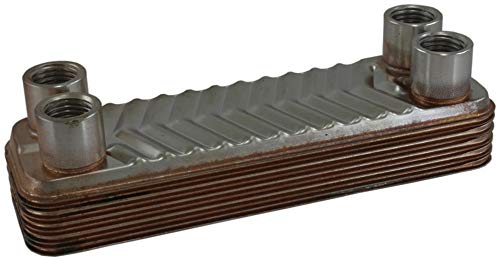
Duda Energy’s HX0510 and HX1210 offerings provide 10-plate configurations with copper brazed joints in 304 stainless steel. These compact units are suitable for smaller loops and precise temperature control in water-to-water applications. Best for: systems needing a compact, corrosion-resistant exchanger with copper brazing for high thermal conductivity.
Limitation: check the exact port sizing and mounting guidance, as some models vary in port configuration and dimensions.
Duda Energy HX1210 Series (Alternative View)

The HX1210 series features a 10-plate layout with a 1/2″ port option and copper brazing for strong thermal transfer. With a specified refrigeration capacity range and copper-plated inner plates, it aims at reliable performance in precise cooling or heating loops. Best for: targeted projects needing compact, copper-enhanced heat transfer in tight spaces.
Limitation: model variations mean verify port size and mounting compatibility before purchase.
Buying Guide
What to consider when choosing a 10 plate heat exchanger
Key factors include material quality, brazing method, port size, and overall capacity. Stainless steel 316L with copper brazing offers robust corrosion resistance and strong joints, suitable for water-to-water transfer in heating and cooling systems. Plate count, surface area, and design (such as the fish bone pattern) influence heat transfer efficiency and pressure drop.
How to match capacity and flow requirements
Compute your design load and desired temperatures. Higher BTU/h capacity supports larger spaces or faster heat transfer but may demand more powerful pumps. Compare units with similar port sizes to ensure adequate flow and avoid unnecessary pumping power.
Installation and maintenance considerations
Look for models with easy hookups and accessible gaskets or brazed joints. Smooth-thread connections facilitate installation. Plan for regular inspection of copper brazed joints and stainless steel surfaces to prevent leaks and maintain efficiency.
Operational considerations
Consider the operating environment, including temperature and pressure ranges. Units with broader design temperatures and higher maximum pressures provide more flexibility but may come at a higher upfront cost. Balance long-term energy savings against initial price.
Comparison tips for buyers
- Best for high-capacity radiant floor systems: prefer 4×12″ configurations with larger BTU/h ranges.
- Better for compact spaces: 3×8″ models offer a smaller footprint with solid performance.
- Choose this if you want easy installation: look for smooth-thread hookups and clear port specifications.
- Avoid this if your system uses non-standard port sizes: verify MPT/NPT dimensions before buying.
FAQ
- What is a plate heat exchanger used for? It transfers heat between two fluids in applications like water heating, floor heating, snow melting, and industrial cooling.
- Why is copper brazing important? Copper brazing enhances joint strength and heat transfer efficiency in stainless steel plates, improving durability under high temperature and pressure.
- Which port size should I choose? Port size should match your piping. Common options include 3/4″ and 1″ MPT, so verify compatibility with existing fittings.
- How do I estimate BTU requirements? Calculate the heating or cooling load of the space or process and select a unit with a BTU/h rating that meets or exceeds that load.
- Are these exchangers suitable for floor heating? Yes, many models are designed for water-to-water transfer in radiant floor systems, offering efficient heat distribution.
- What maintenance is necessary? Periodic inspection for leaks, cleaning of any fouling on plates, and checking brazed joints ensure longevity.